Accenture’s latest Pulse of Change research finds the overall C-Suite is largely optimistic about revenue growth for this year, though there are notable gap between the sentiments of CFOs and CEOs. One area of agreement: No matter the extent of growth, both groups believe AI will be a significant driver.
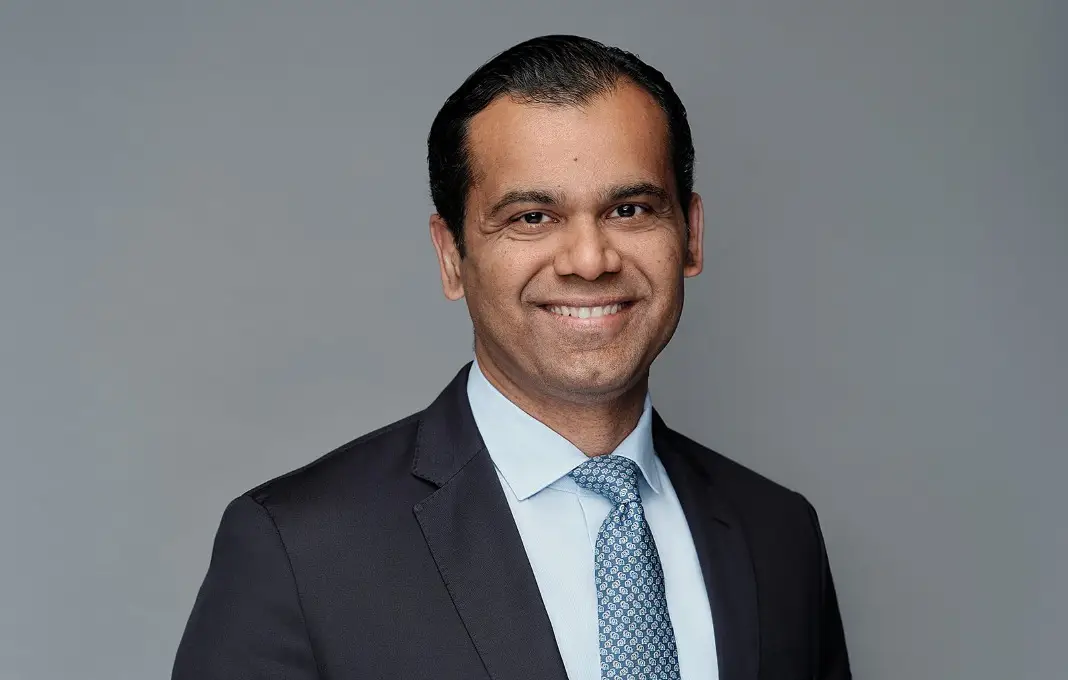
Muqsit Ashraf, group chief executive for Accenture Strategy, spoke with CFO Leadership about the firm’s survey of 3,650 C-Suite executives and 3,350 employees globally.
There seems to be a gap between 63 percent of CFOs expecting faster overall revenue growth, compared to 79 percent of CEOs. What does this tell us about CFOs’ role in grounding growth ambitions in financial reality, and how are these differing expectations navigated?
CFOs are generally more conservative than their CEO counterparts when it comes to 2026 revenue predictions.
For instance, only 35 percent of CFOs expect strong domestic revenue growth to increase in 2026, compared to 47 percent of CEOs. However, nearly half (49 percent) of CFOs anticipate stronger international growth, suggesting CFOs are strategic, measured and strive to ground their perspectives in market-specific realities.
CFOs must work hand-in-hand with their CEO and other members of the C-Suite in what are complementary roles. By supplying a realistic, data-informed perspective, CFOs should double down on their ability to drive smart decision-making and help CEOs shape their organization’s growth and direction.
At a time when the rules of competition and leadership are being rewritten, a company’s strategy is strongest when it pairs the CEO’s ambition with the CFO’s pragmatism.
It’s clear CFOs are committed to AI, with 87 percent anticipating increased investments and nearly 70 percent believing AI is more beneficial to revenue growth. Where are CFOs seeing the clearest outcomes, and how is AI contributing to top-line expansion?
CFOs share the same conviction on AI as other members of the C-Suite. Leaders are championing AI as a primary revenue driver, and we’ve seen applications across the project lifecycle—from idea generation to implementation and results analysis. Among our clients, there’s a clear focus on delivering business outcomes enabled by AI.
For example, three quarters (78 percent) of C-Suite leaders now view AI as more beneficial to revenue growth than cost reduction, up 13 percentage points from June 2024. This optimism is mirrored in CFO’s increasing use of AI in their daily work as well. Currently, 36 percent of CFOs are using generative AI in their work, second only to chief strategy and innovation officers (51 percent).
This daily adoption is vital: By automating routine tasks and streamlining workflows, AI is empowering CFOs to dedicate more time and energy to high-level strategic work that ultimately fuels topline growth.
In general, the C-Suite plans to continue their AI investments despite the potential for an “AI bubble.” That said, nearly half (43 percent) of CFOs indicated they’d decrease hiring in such a scenario. How should CFOs be balancing the mandate to innovate with AI against contingency planning for potential market corrections?
AI confidence is high, with 87 percent of CFOs anticipating increased AI investments this year, yet 43 percent would decrease hiring if an “AI bubble” burst. The data illustrates the critical balance that CFOs and the C-Suite must achieve between desired innovation and necessary caution.
There is clear consensus of AI as a transformational technology, which begs the question of how organizations can invest in AI in a way that is fiscally responsible and builds resilience within their organizations.
The answer?
Ensuring people are in the lead on AI. We’ve seen in the past companies dedicate two-thirds of their investments to technology, and the other third on people. That equation must be flipped on its head.
What’s important for CFOs and other executives is to be able to spot the trend of where technology is going, understand where they can create enterprise value and create partnerships with the next generation of players internally and externally to help organizations move at speed and scale.
Regardless of potential market changes, a skilled workforce that can utilize AI to drive topline results will never lose its value. Effectively training and upskilling employees to capture AI’s full potential is the ultimate contingency plan.
Based on these findings, what would you say is the single most critical leadership imperative for CFOs and other senior executives in 2026 to effectively guide their organizations through this period of anticipated change and technological transformation?
A staggering 82 percent of C-Suite leaders are expecting a higher level of change in 2026 than they were a year ago, according to our research. In an era marked by relentless technological, geopolitical and economic disruption, organizations are seeking a clear area of stability to ensure continued growth.
That anchor is the workforce. While many companies are focusing solely on scaling technology, the biggest barrier to realizing AI’s full value in 2026 is no longer the technology itself, but alignment with the people and processes who power it.
We know from our data that employees want to have a voice in how AI is shaping their jobs. They are eager to learn and be on the frontlines of the AI transformation, with 43 percent saying clear training would give them more confidence using AI tools.
The directive for senior leaders here is clear: Invest in employees and technology simultaneously. This dual embrace of the human and AI factor is how CFOs can confidently guide their organizations and scale enterprise-wide reinvention in 2026.