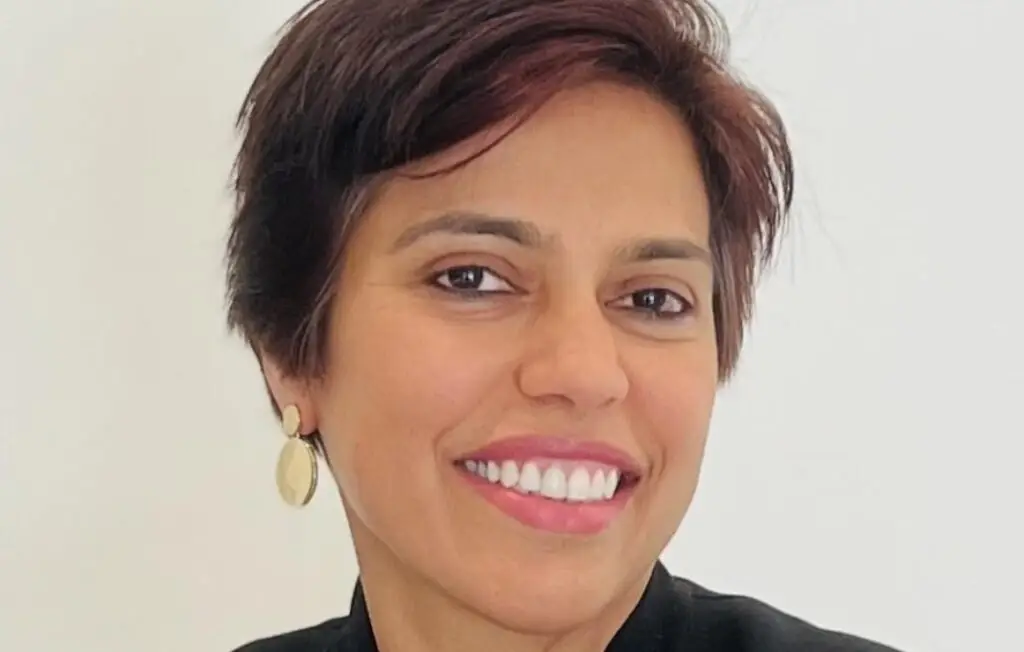
It goes without saying that CFOs need to excel at financial operations. But equally important, says San Jose, California-based Bill’s CFO Rohini Jain, is “truly understanding the business—its products, services and operations.”
Jain has had plenty of chances to learn. Her past experiences include stints at PayPal, Walmart eCommerce, eBay, General Electric and more. She spoke with CFO Leadership about how each position taught her how to be a better CFO—and what she would do differently today.
How have your past experiences, from industrial manufacturing to e-commerce to fintech, shaped your leadership style and prepared you for the CFO role at Bill?
Throughout my career, I’ve learned that great finance leadership requires adaptability and deep business understanding. Every job I’ve had has provided me with additional skills that have set me up for success—like the importance of operational rigor and process excellence, or how to scale financial operations at complex businesses while maintaining accuracy and control.
Early in my career at GE, working in factory finance for the healthcare business taught me that strong processes can overcome deficiencies in systems or resources. If you do something more than once, you should make it a process to drive efficiency and consistency. That discipline gave me an appreciation for understanding the business hands-on.
At eBay, I built on those foundations by leading finance and analytics for the global shipping portfolio and making it a point to personally use every new product we launched, whether it was Pick-Up Drop-Off or the Global Shipping Platform, to experience firsthand what worked and what didn’t for customers.
Walmart then showed me the sheer scale and complexity of a global e-commerce business and what FP&A operations look like at that level. I applied my learnings to build operating mechanisms that improved forecast accuracy and accountability across teams.
At PayPal, I combined all these lessons to help scale the merchant platform business, partnering across product, sales and operations to launch solutions for large enterprise customers. By aligning financial strategy with customer and product goals, we accelerated adoption and revenue growth.
In my new role as CFO at Bill, I’m bringing together this cross-industry experience to help SMBs access the same sophisticated financial tools that large enterprises use, seeing opportunities others might miss and approaching challenges with creative, portable solutions. My leadership style focuses on empowering teams, embracing innovation and always keeping the customer at the center.
What are some of the overall lessons you’ve learned over the course of your career?
One of the biggest lessons I’ve learned is that truly understanding the business—its products, services and operations—is just as important as knowing how to do finance well. Starting out at GE as a young professional in the healthcare business, I worked in factory finance, even making circuit boards and conducting physical inventory myself. That experience taught me the value of rolling up my sleeves to understand what the business is actually trying to do.
At eBay, I carried that mindset forward by personally using every new shipping or fulfillment product we created, so I could experience the customer journey firsthand and understand exactly where we were delivering value and where we needed to improve. That hands-on understanding of logistics and customer pain points helped me make smarter investment decisions and deliver more sustainable growth.
Another key lesson is to build both hard and soft skills in every role, without getting fixated on level or compensation. At PayPal, I stepped out of FP&A and into an operational COO role, moving outside of finance and into a zone of discomfort and accelerated learning. That experience gave me an “outside-in” perspective, seeing how business functions work together to solve real problems and drive growth, and along the way, it made me a stronger finance leader than ever before.
Is there anything you would have done differently?
There were times in my career when I became comfortable in a role and didn’t act quickly enough when I felt my learning had started to plateau. That’s not when I do my best work. For example, in one early leadership position, I stayed longer than I should have because the team was high-performing and results were strong. In hindsight, I wish I had been more proactive about pushing myself into new areas, and staying sharp through reading, training and upskilling for personal growth.
Early in my career, I also hesitated to take on bigger challenges because I didn’t feel fully “ready.” That inner voice of doubt is always there, listing the reasons not to take the next big swing. But I’ve learned that you’re never fully ready, and you don’t have to be. Some of the most valuable lessons come from stepping into the unknown, even when there’s a risk of failure. You grow far more by pushing through discomfort than by staying in place.
What do you see as the biggest challenge facing CFOs right now?
CFOs have always been tasked with balancing operational efficiency with strategic growth—and doing so in an increasingly complex business environment. We are expected to be both cost optimizers and growth enablers, often simultaneously, and cash flow management remains critical.
As we all embrace AI, trying to understand the right type of AI investments that drive customer experiences and business returns and the levels of investments in a rapidly evolving environment is a question we are all trying to answer.
Additionally, CFOs are also grappling with talent transformation: Our teams need new skills to leverage AI and advanced analytics effectively, while maintaining data security and compliance. I see some of these challenges also as an opportunity: The key is embracing technology that enhances human capability rather than replacing it, allowing CFOs to drive meaningful business impact.
What advice do you have for aspiring finance leaders?
Don’t limit yourself to your job description. Step up and do whatever the business needs. Always think of yourself as a business leader first, rather than just a finance leader.
One of the most valuable things I did was to take on a business role outside of finance. As COO of PayPal’s merchant business, I led cross-functional teams spanning product, sales and operations. When I returned to a CFO role, I brought with me a broader perspective on customer needs, operational constraints, how to design solutions that work in the real world and that made me a more well-rounded leader.
As you grow, your success depends not just on what you personally deliver, but on the strength of your team. Invest in building high-performing teams with a strong, cohesive culture. As a leader, that’s where more and more of your time and energy needs to go, not just getting the job done, but enabling others to thrive.