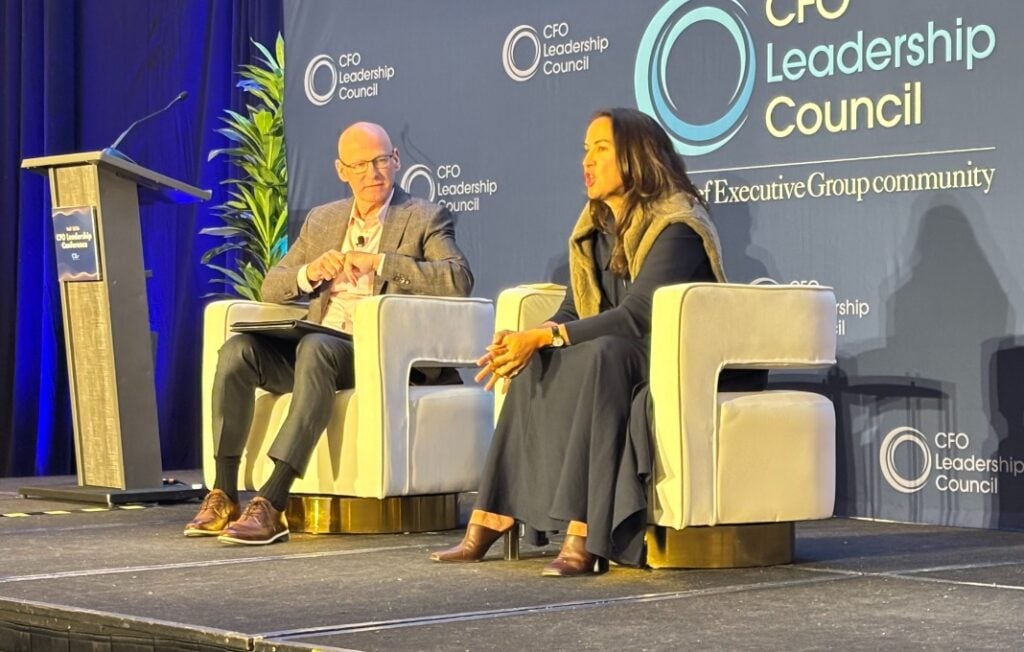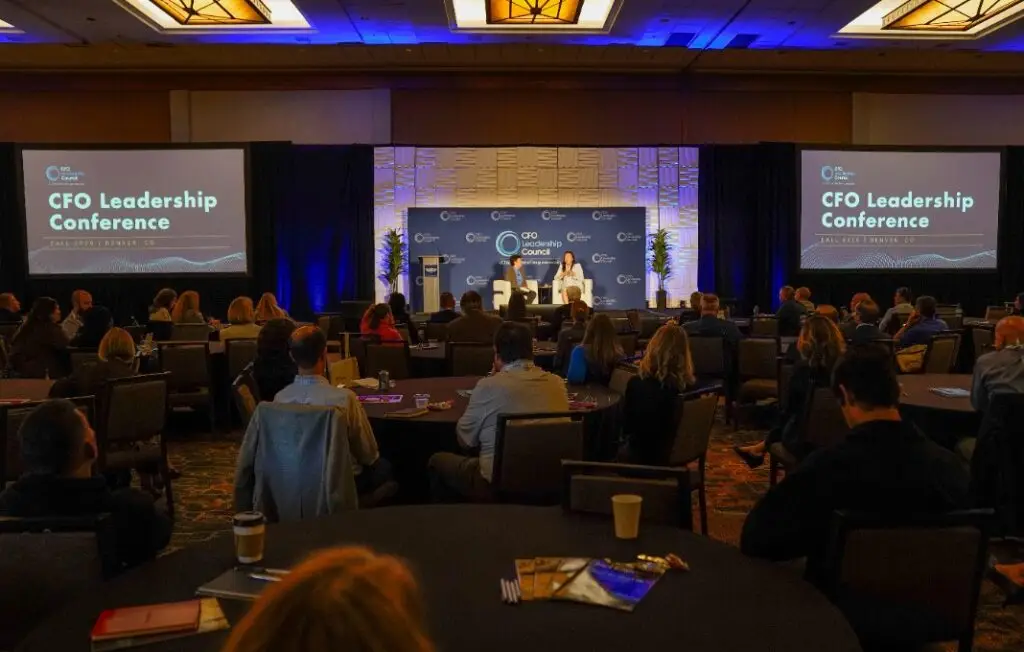

Sandra Clarke has seen healthcare cost management from every angle: pharmaceutical companies, insurance carriers and the finance suite. As former CFO of Blue Shield of California, she notes that the company paid for employee healthcare just like every other employer. “We did not have free healthcare,” she told a room full of CFOs at the CFO Leadership Council’s Spring 2026 Leadership Conference in Boston this week. “We paid for it just like everybody else did.”
We live in a time when premiums are rising 10 percent annually for most employers—and 20 percent or more for smaller ones. Only one in four employers can absorb healthcare cost increases without cutting somewhere else in the business. And the financial and legal exposure is growing. When Johnson & Johnson employees sued the company for not being good stewards of their healthcare dollars it was a wake-up call even if the case was ultimately dismissed. “Employees and other groups are getting much more vocal about what those costs are and what are you going to do about it.”
To help, she laid out six “watchouts” for CFOs, questions every finance leader should be pressing on right now:
1. Do we have the right data—including full claims and pharmacy costs—to make informed decisions?
Clarke came back to this one again and again. Managing your healthcare spending is impossible without clean, complete data. Without it, everything is guesswork. “You are budgeting blind if you don’t own that claims data or at least own access to it.
“Do we have the right data to be able to make good decisions on what our strategy should be, what our budget should be? And how well do we understand our population’s health and its stability or volatility? Because if you don’t have good answers to those questions, the decisions that you make around the type of coverage you want and the partners you want to use are going to be impacted—probably to the negative side.”
Watch out for vendors who charge extra for access to your own information. “I’ve seen a few entities out there try to sneak in additional fees if you want more access to your data,” she said. Pharmacy data is a particular blind spot—specialty drug costs are the fastest-growing line item for most employers, and transparency into PBM pricing remains, in Clarke’s telling, largely illusory despite industry claims to the contrary.
2. How well do we understand our risk pool and volatility?
Knowing your data is step one. Understanding what it means for your specific workforce is step two—and many CFOs skip it.
A younger, healthier population has very different leverage and risk exposure than an older or higher-turnover workforce. Carriers will look at multiple years of claims experience when pricing or renewing your plan. Your industry matters too: Some sectors carry higher inherent health volatility simply because of the nature of the work. And geography shapes your options in ways that aren’t always obvious—a rural workforce with one hospital system in a hundred-mile radius gives you almost no negotiating leverage, while an urban employer choosing whether to include a major academic medical center is making a genuinely consequential financial call.
3. Do we have a broker or benefit consultant focused on our goals and needs?
Not all brokers are working for you. There’s a big difference between advisors who genuinely engage with your situation and those running a commodity playbook. She also notes the difference between brokers—who primarily present options and handle transactional issues—and consultants who look strategically at your overall benefits picture. Both have value. The key is knowing which one you’re working with.
“Did they hand me a sheet they handed to a number of other entities out there? Or did they really listen to what we’re trying to do and they’re helping us come up with the options? Maybe it’s not a bespoke program, but it’s the option of what’s available that best fits what my company needs.”
4. Have we considered all plan options for cost and employee satisfaction?
Cost and employee satisfaction pull in opposite directions—and Clarke pushes CFOs to be honest about where they’ve actually landed on that spectrum.
“If you have a program that is abrasion free, you’re probably paying too much. But think about that balance and have you really vectored too far in one direction or the other.”
The harder conversation, she said, is getting leadership aligned before you make changes employees won’t like. Her example is pointed: cutting a prestigious—and expensive—hospital system from your network.
“If you’re in Northern California and you cut Stanford out of your network, what howl are you going to hear about it? It is an extremely expensive system. Are you willing to pick your academic hospital in your area? Are you willing to say, look, we are doing this in your best interest and I know you don’t like it. We might have to change doctors, but this is what it means in terms of our overall business goal attainment and our ability to afford other things.”
Some 80 percent of people in a recent survey believed their doctors act solely in the patient’s interest—and that insurance companies are the problem. That’s the sentiment CFOs are navigating when they try to rationalize network decisions. Hospital systems are skilled at the pressure campaign. “They are really good at convincing patients that they are going to have their health seriously harmed if they aren’t put back in network,” Clarke said.
5. Are vendor incentives aligned with our goals?
How you pay your partners shapes what they optimize for. The concept of value-based care—where vendors get paid when costs go down and quality goes up—is imperfect in practice, she acknowledges. But the intent is right. If your broker, third-party administrator or specialty vendor isn’t compensated in a way that aligns with your goals, assume their advice reflects that.
“Make certain that they’ve got skin in the game also—that they are going to get paid on the performance, the outcomes that they show.”
6. Do our contracts provide full transparency into fees and pricing?
Read the contracts. Specifically, look at what data access costs you, how fees are structured and whether you’re getting genuine transparency or a well-packaged summary.
Clarke is particularly skeptical of pharmacy benefit managers claiming to have moved to transparent pricing models. “When all of those models came out, they all employ a lot of extremely smart actuaries that have modeled out exactly how to change their revenue model so it wasn’t going to hit their income. So I remain deeply skeptical that it’s really going to drive down the cost for us.”
Her recommendation: Where possible, get competitive bids. “I would try not to pick one, but to look at a couple of options like you would for any other contractor.”
For Clarke, this isn’t about mastery—it’s about confidence. CFOs, she said, don’t need to become healthcare experts. But they do need to feel equipped enough to have an educated conversation, recognize when the answers they’re getting aren’t good enough and push back. “If you can bend this trend that you are seeing in your expense line even a little bit,” she said, “it can be a significant impact.”