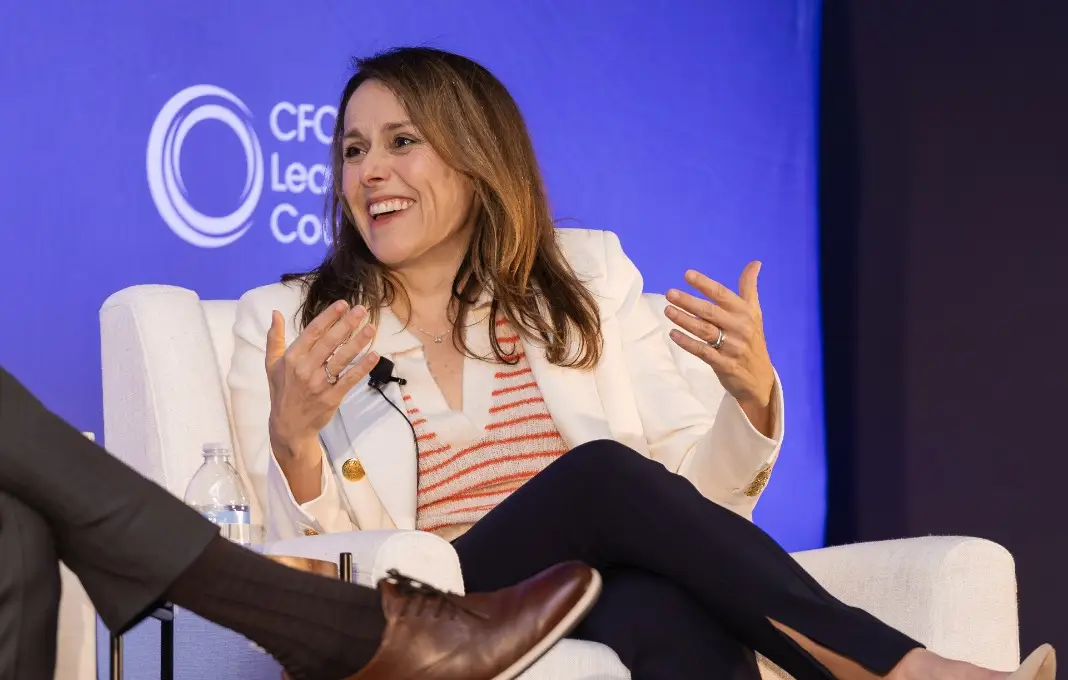
Karen Walker has scaled finance organizations at some of the fastest-moving companies in tech—Uber, Pandora, PagerDuty and now Sysdig, a cloud security company where she serves as both CFO and a member of the office of the CEO.
That last role is the newest wrinkle: When Sysdig’s co-founder needed an operator to run go-to-market and company operations while he focused on product and engineering, Walker stepped up.
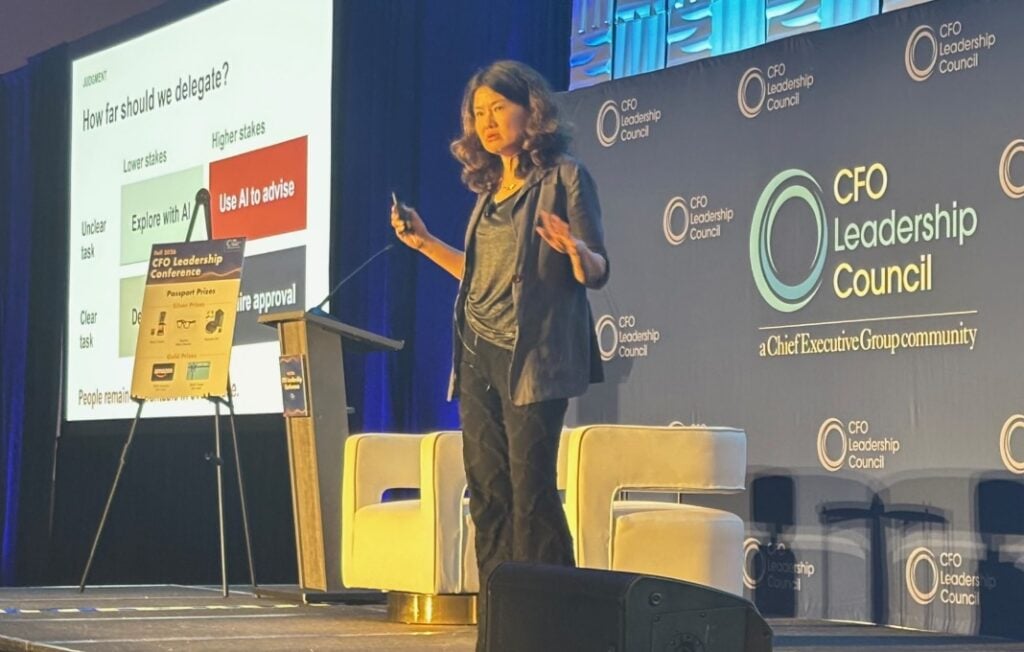
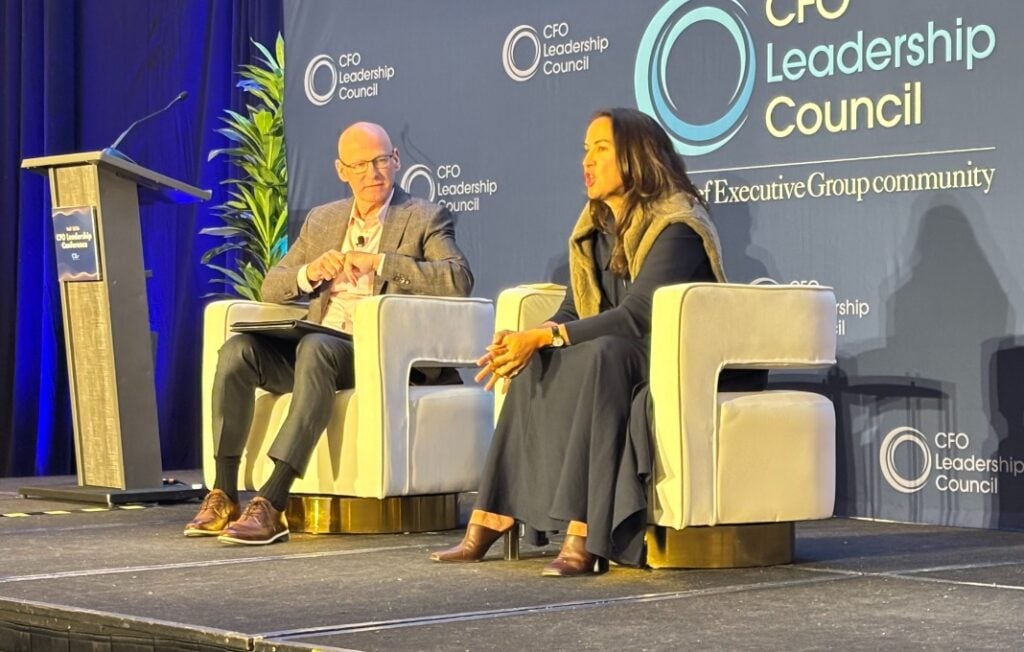
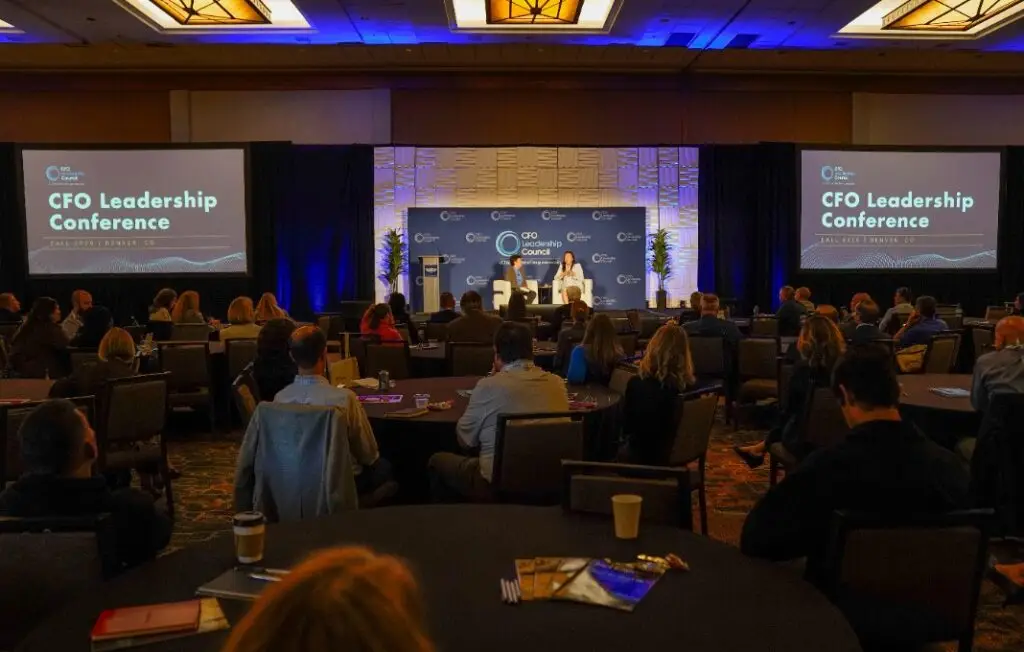
At the CFO Leadership Council’s 2026 Spring Leadership Conference in Boston, she shared what she’s learned—about scaling, influence, cyber risk and what it takes to grow beyond the finance chair.
Know what you’re protecting before you invest in AI. Sysdig’s business is cloud security, so Walker thinks about AI risk differently than most CFOs. The speed of AI-enabled attacks—threats that can unfold in minutes—means defenders need AI-powered tools just to stay even.
But internally, she’s equally focused on governance. Shadow AI is a real problem: employees swiping credit cards for tools, attorneys loading plug-ins on laptops, data going places nobody’s tracking.
Her solution is a center-led approach—rather than employee one-offs, be sure you have enterprise-level AI setups that provide zero-day retention protections and ensure company data isn’t used to train models, with the CISO helping set the guardrails. “I think if you have just people swiping the credit card, you have no visibility into the spending as a CFO. You’re just going to get surprised after the fact.”
Measure AI outcomes before you scale AI spend. Walker is skeptical of companies going “full steam ahead” on AI without defining what success looks like. The productivity gains are real but often hard to see at the enterprise level—and nobody’s yet claiming dramatic improvements in financial profile or time to market.
Her approach: Sit down with the head of engineering, the CMO and other business partners, agree on the outcomes you want to drive and build accountability around those before the spending scales. “I think having a programmatic approach and really thinking about the risk assessment is absolutely critical. Otherwise there’s a real challenge.”
Influence runs on curiosity, not just data. As CFOs take on broader operational roles, the ability to shape decisions—not just validate them—becomes essential. Walker’s view: you earn that influence by showing genuine interest in how the rest of the business works, not by leading every conversation with a financial lens.
She joins customer meetings, engages with the field and uses her access to bankers and investors as a two-way exchange. “I always like saying, and this is what I try to instill as a mantra for my finance teams: If we get up every day and we think about what is best for the customer and we operate that way, then we’re doing the right things.”
Stepping into a broader role? Lead with vulnerability. When Walker joined the office of the CEO, she was suddenly leading functions she hadn’t grown up in—sales, marketing, operations. Her advice to any CFO taking on a bigger remit: Be honest about what you know and what you don’t, ask the leaders around you what they actually need and find the people you already trust to help fill the gaps.
“I think the advice I would give to anybody that’s stepping into a broader role like that is to be very vulnerable and candid about what you know and what you don’t know. People appreciate that authenticity.”
You may need to leave to get the seat. For pre-CFO leaders waiting for an internal promotion, Walker has a direct message: Don’t assume it’s coming. The CFO-CEO relationship is a tight bond, and incumbents often simply expand their own remit rather than create a path for their successor. Advocate for yourself clearly, ask for explicit feedback on the path forward—and be willing to make the leap externally if the answer isn’t there. “You may need to make the move. That internal promotion is just not that common.”
The CFO-CEO partnership is the job. Walker joined Sysdig largely because of the relationship she saw with the CEO from the start—and she thinks that’s the right filter. The best CEO-CFO pairings are built on complementary skills and a willingness to be candid, even when it’s uncomfortable.
Her version of the role isn’t to validate what the CEO thinks—it’s to be the partner who says what others won’t. “Other than the CEO, I think we have the broadest insight of anybody on the executive team into how the business is run and the operations. So I think that is a very strong position to start in.”