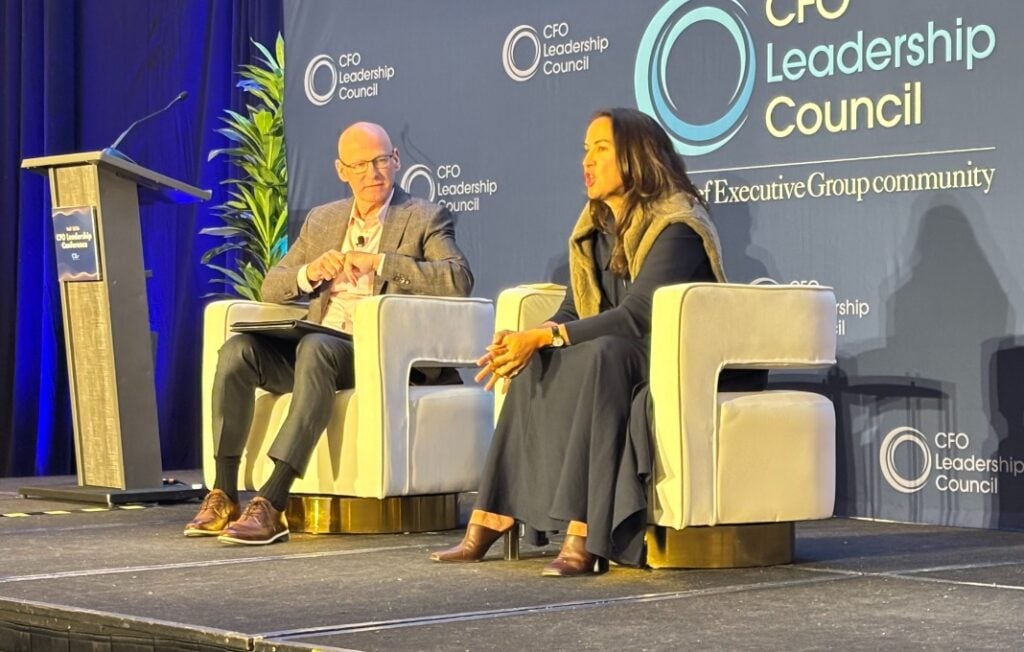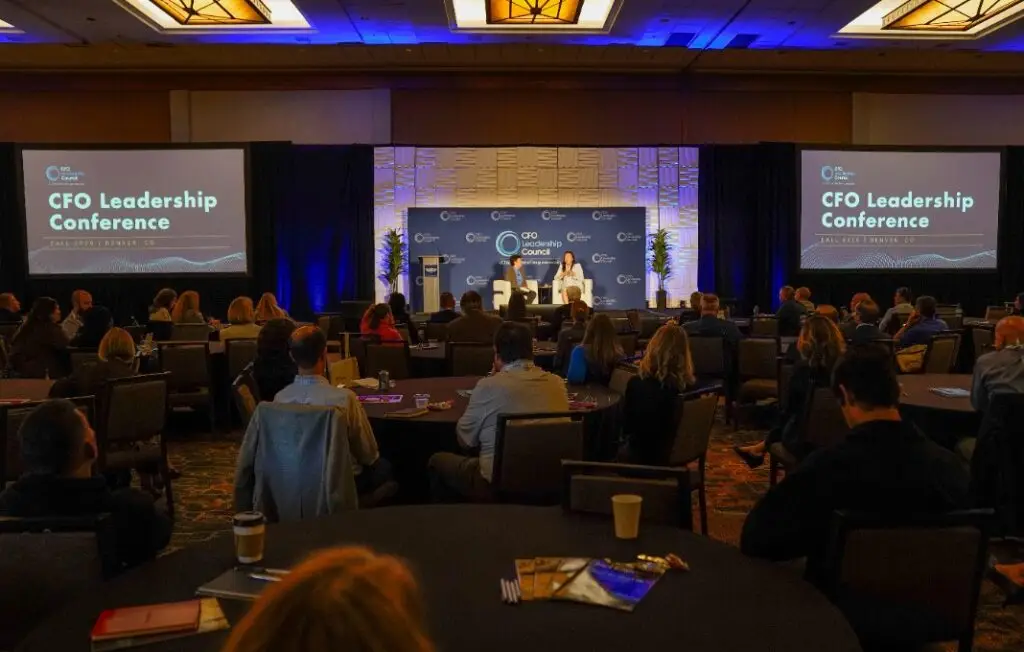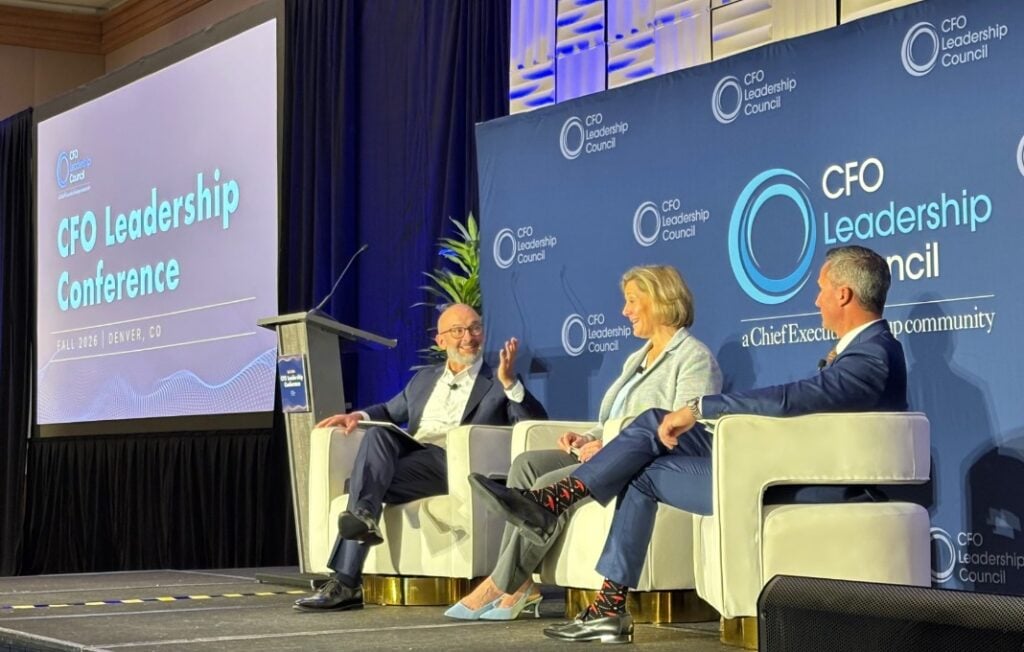

Oxford Economics expects the U.S. economy to grow a respectable 2.5 percent next year. Michael Pearce, the firm’s chief U.S. economist, spent much of his talk at the CFO Leadership Conference in Denver this week explaining why that number could be badly wrong in either direction.
If AI spending disappoints and tech stocks fall 25 to 30 percent, Oxford’s models put growth close to zero. If the boom keeps going, Pearce said, “I don’t think a 4 percent GDP growth number is outside the realm of possibility.”
With that much uncertainty, the headline numbers won’t warn you in time. Here’s what Pearce suggested CFOs watch instead.
Watch diesel, not crude. Oil prices get the attention, but the supply squeeze is worst in refined products. Pearce expects diesel to keep raising the cost of freight, jet fuel, farm equipment and fertilizer, and to reach consumer prices over the next six to nine months. “So diesel prices up at $6, $6.50 a gallon is more consistent with crude oil prices being at kind of $140, $150 a barrel rather than the $100 or so that we see today.”
Watch the stock market as a spending indicator. Pearce estimates rising stock prices have driven about a quarter of consumer spending growth over the past couple of years. The highest-earning 20 percent of households account for more than half of spending on travel, hospitality and new vehicles, so if tech stocks fall, those categories will feel it first. Stock holdings outside retirement accounts are approaching three times household incomes, he pointed out. “That’s more than the value of all the real estate in this country, so it’s no longer the case that housing is the biggest asset for households in this country.”
Watch employment ratios, not monthly payrolls. With an aging workforce and less immigration, Pearce estimates the economy needs only about 30,000 new jobs a month to keep unemployment steady. A few years ago it needed 200,000 to 250,000. A jobs report that looks weak may actually be healthy. “That 40, 50,000 jobs per month is actually a relatively solid number in the context of slowing labor force growth.”
Watch young workers in AI-exposed fields. Unemployment among workers in their 20s has risen faster in jobs with high AI adoption. Pearce sees it as an early sign of disruption that the overall numbers still hide, because AI is creating roughly as many jobs as it eliminates. “So the overall labor market appears calm on the surface, but underneath we’re seeing many more signs of disruption.”
Watch small business. Higher rates and weaker demand hit smaller firms first. If they pull back on hiring, consumer spending tends to follow. “We know small business is the lifeblood of the job market,” he said. “And where the job market goes, the consumer tends to follow not far after.”
Watch who’s lending to whom. Chipmakers are financing the customers who buy their chips. Private credit is concentrated in loans to software companies, and new Federal Reserve data show state and local pension funds are heavily exposed. These connections mean one failure could hit in many places. “We don’t know when the music’s going to stop, but we can at least point to the weak parts of the economy and kind of think through the potential implications.”
Watch the trades. The AI build-out is spreading into metals, machinery and utilities, and it’s driving up pay for the tradespeople data centers need. That helps if you sell into that supply chain and hurts if you’re competing for the same workers. “If you’re HVAC, electric, electrical, the demand has been off the roof and we’re seeing that wage premium really rise.”
Watch the revisions, not the first print. Productivity figures keep getting revised upward. The same thing happened in the late 1990s, when the gains showed up in the statistics only later. If the AI payoff is real, Pearce thinks the revisions are where it will appear first. “So the economy’s becoming more productive, and we’re just not capturing it in real time.”
Finally: watch the politics. Public opinion has turned sharply against AI. So far the backlash has mostly played out at the state and local level in the midterms, and the industry people Pearce talks to aren’t too worried because they can move projects elsewhere. He’s less relaxed about the 2028 election cycle. “Are we going to be talking about much broader restrictions on this technology?” he asked. “Maybe some AI safety event that really does scare leaders enough to pull back in terms of the development?”