“Competitive moat” is a good candidate for business buzzword of the year, and for good reason. In our AI-saturated environment, where nearly every type of model for making money feels like it could be under threat, the idea that your company has a product or service that somehow cannot be replaced has real allure.
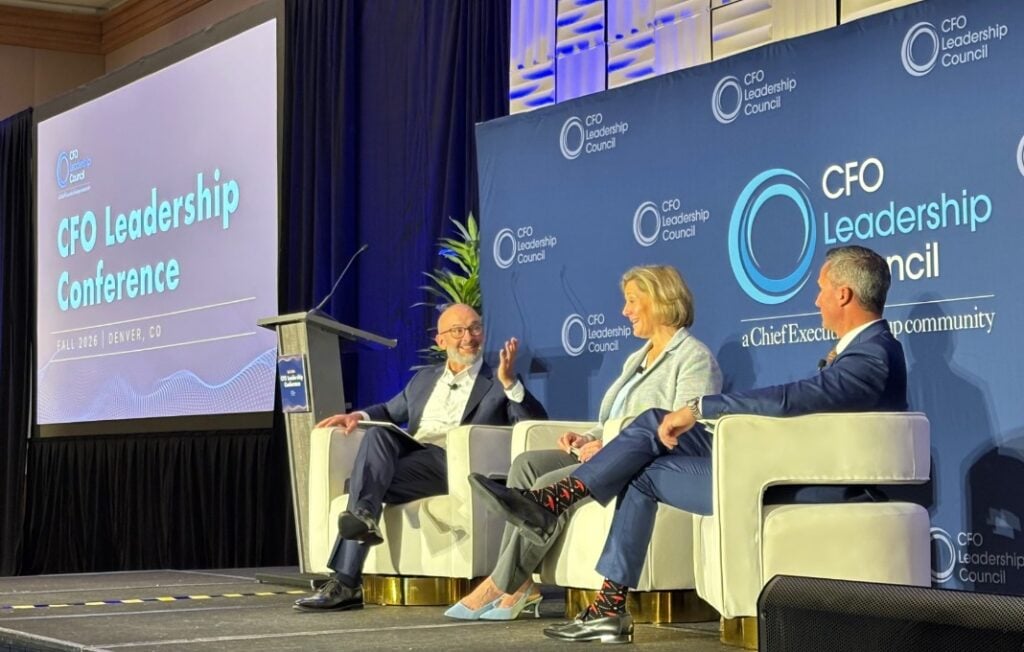
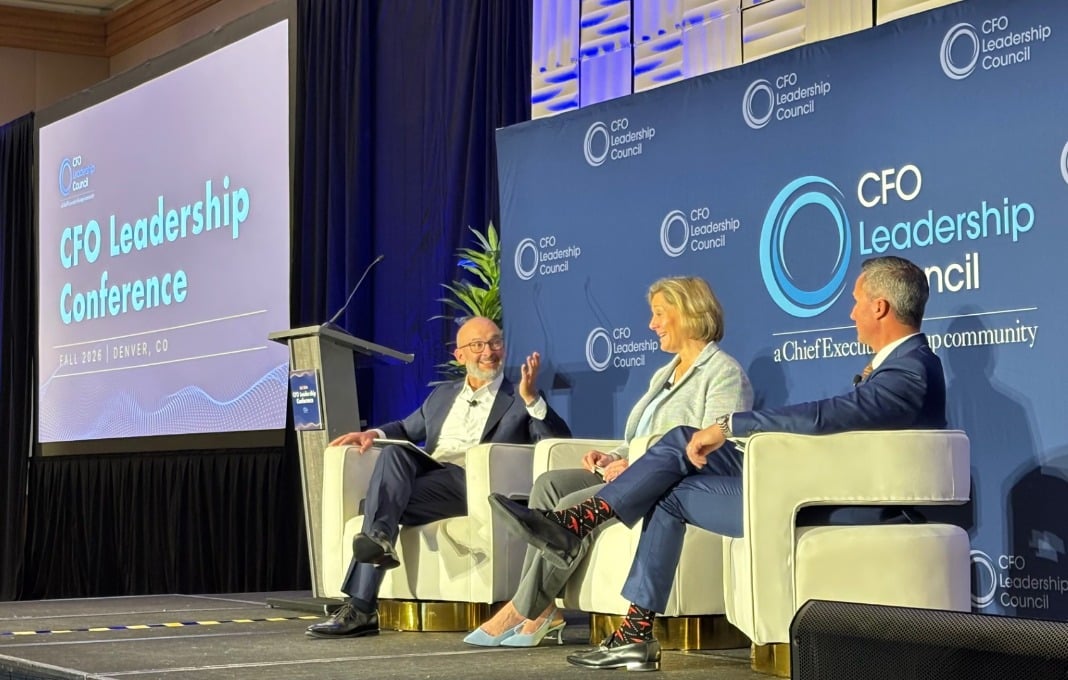
But let’s face it: Most companies don’t have a true competitive moat. Gail Feeder, CFO of SageWater, a private equity-backed company that replaces piping in multifamily buildings, doesn’t. “As a construction company, we have no strategic IP that is protecting us from competitors coming in and doing what we do,” she said at our CFO Leadership Conference in Denver this week. “So we look more at what is our competitive edge? How do we win? What do we do best?”
She joined Dan Rohr, head of equity research at Morningstar, in a conversation moderated by Charlie Tice, private equity national practice lead at Travelers. The session drew on research Travelers conducted with Morningstar.
Morningstar’s bar is strict. A real moat is structural—it’s built into the business rather than dependent on good management or won again every year. Before Morningstar’s analysts will credit a company with one, Rohr said, they look for four things:
- Returns on capital that clear the cost of capital, not just growth and profits.
- A clear economic logic that ties those returns to a structural source, such as switching costs.
- Confidence that the advantage will last.
- No material tail risk that could wipe out years of excess returns.
The third is where most companies fall short. “We need to be reasonably confident that the company can rely on that particular moat source to generate excess returns at least 10 years into the future,” said Rohr. “It’s a very, very high bar.”
And AI? That will make all of this harder, he said. “Integrating AI into your workflows for most companies is not going to be a source of durable competitive advantage. It’s going to be the price of admission. It’s going to be what’s required to survive.”
It will also dissolve advantages companies already have. Enterprise software makers have long relied on the pain of retraining employees to keep customers from leaving, and agents could make that retraining unnecessary. Rohr expects AI’s ripple effects on competition to be at least as transformative as globalization and digitization have been.
So what do you? They shared some ideas:
- Be honest about which moat you have. Rohr said the word moat gets applied far too loosely, to things like a great product, efficient operations, a talented management team or wonderful customer service. “These are attributes that a competitor in the fullness of time can replicate. And as such, these are not structural attributes.”
- Know that your people are the edge, not the moat. Survey respondents called their workforce essential to success, but they had little confidence that any workforce advantage would last. Rohr agrees with them: “People build the moat, people are needed to maintain the moat, people can erode the moat with poor decisions or risky behavior, but people at the end of the day are not the moat.”
- No moat? Spend on your edge. SageWater spends on brand, and on the crews that customers trust inside their homes. It watches field-leader tenure closely, because losing a leader usually means losing the crew. In acquisitions, the people are the first thing it examines. “How are their people treated? What does their compensation and benefits look like? How are they performing in the field?”
- Master your data. Feeder said buyers’ analysts have asked SageWater for its revenues from as long as 20 years ago, which is a bit ridiculous. But the lesson is there: The better the data you have, the better the case you can make for your edge. “And so I would tell you that I think it’s really important that you have strong data, that that data can tell your story.”
And of course, get your team to agree on what your edge actually is. The Travelers research found that CFOs and risk managers, for instance, often see threats differently. Feeder’s advice: Start there. “Make sure you all can articulate what that secret sauce is. And then ask each person on your executive team, what are the top three risks to that?”