For fast-growing companies, even promising opportunities to scale can put a business at risk. That’s particularly true in fintech, where funding needs and partner demands can shift rapidly.
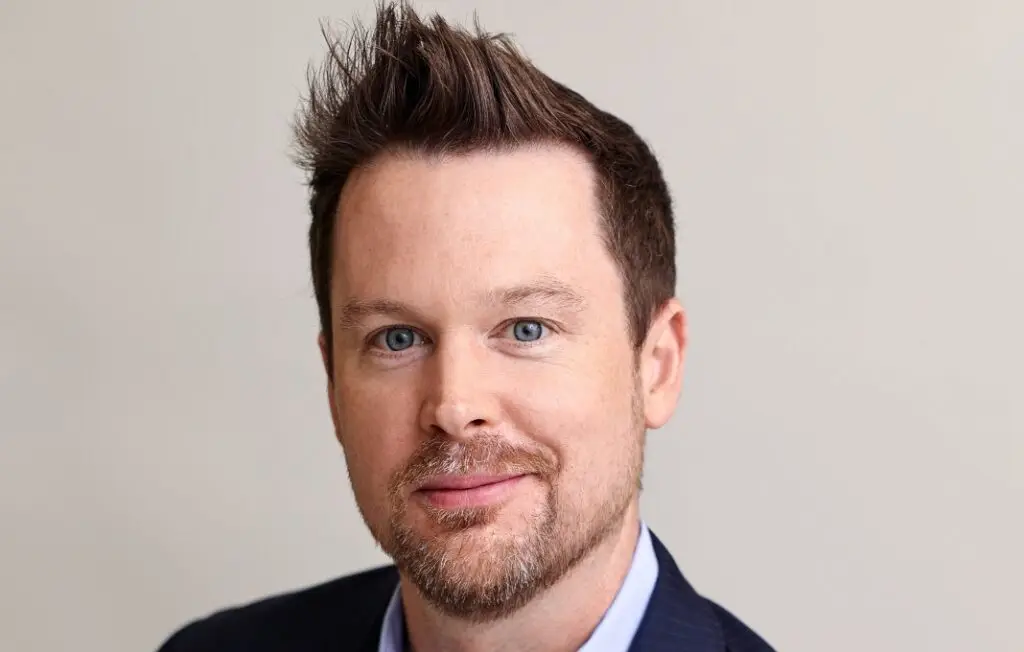
For Francis Mitchell, CFO of Hatch Bank, a sponsor bank serving fintech companies, “every investment we make in financial infrastructure ties back to our maturity assessment.
“I can’t overstate this approach for organizations that want to scale and leaders who want personal success. It provides the team a shared language for where we are, where we need to be and what it takes to close that gap.”
In an interview with CFO Leadership, Mitchell discusses the specific metrics he uses to assess readiness for growth and how a culture of trust is the ultimate tool to help organizations move quickly.
What role do you play in evaluating and selecting strategic partners?
The CFO’s role in evaluating partners and strategic relationships at Hatch, including third parties, is shaped by our culture and how the leadership team operates, not by a process diagram.
A benefit of being a smaller organization is that the executive team stays close to the culture, and it’s reinforced at every level. It’s high-trust, direct, open and collaborative—with what I would call a “high speed to trust” culture. At the C-Suite level, that means extending trust quickly, communicating openly and granting each other genuine autonomy to execute.
Structurally, we’re a flat organization of roughly 30 employees—no real silos, titles don’t mean much and employees at every level are encouraged to share their perspectives. That cultural and structural foundation is what makes everything else about partner selection work. I’ve only worked at one other company where the ingredients for that kind of organizational trust existed.
Within that culture, my role differs by the kind of partner. For strategic partners on the finance and accounting side, I have the ultimate say, but I actively solicit feedback and buy-in from other executives and from my team in finance. Any intelligent leader knows you can’t hold a senior employee accountable if they can’t make the decisions that materially affect their ability to be successful. Authority and accountability have to travel together.
For third-party relationships, the model is different. The executive team has a seat at the table, but so do our senior leadership team and others further into the organization. I routinely remind my team that I haven’t done many of their roles, and we need their expertise to identify what could become a challenge if we onboard a new partner or agree to a new product.
The people closest to the work see the issues first, but only if the culture lets them speak up. Building partner selection around that input—not around hierarchy—is how you avoid the surprises that show up six months after signing.
As CFO, what indicators do you look for to determine when your business is ready to scale?
We evaluate five capacities before signaling readiness to scale—liquidity, capital, operational, risk and controls, and talent—across two processes: strategic planning and assessing the maturity of operations within each group. Liquidity is usually the most underweighted and mismanaged of the five, particularly in business models where growth is partner-driven and funding needs move faster than in traditional banking.
For a sponsor bank to fintechs, strong strategic planning has to hold up across a variety of scenarios, with rapid growth being one. That means balance-sheet headroom to absorb partner growth, funding volatility, concentration shift and the changing requirements partners bring as they add new products—before the partner needs it, not in response to it. In sponsor banking, capacity has to lead growth, not chase it.
At Hatch, we emphasize liquidity-and-capital-driven strategic stress-testing, which we believe governs safe growth speed. Given the velocity of funding and capital needs in this business, we have to be collectively convinced each third-party relationship is a strong mutual fit—and that both growth scenarios and any form of exit won’t impede the strength of the balance sheet. Having navigated a liquidity crisis earlier in my career, that experience shapes how I think about strategic planning and stress testing.
Equally important is the roadmap to execution. We use a maturity assessment approach in finance and accounting, scoring each activity on where we are today, the size of the lift to advance and the impact of improving it. Watching the team deliver meaningful enhancements on a regular cadence tells you something about capacity and capability that’s just as important as anything on the balance sheet. Execution capability is, ultimately, part of the readiness equation.
What investments are you making in financial infrastructure to better support high-volume?
Reporting, reconciliation and AI are areas we’re investing in, but only through a well-defined process the team has bought into. Every investment we make in financial infrastructure ties back to our maturity assessment.
I can’t overstate this approach for organizations that want to scale and leaders who want personal success. It provides the team a shared language for where we are, where we need to be and what it takes to close that gap. Investment decisions follow that map rather than chasing whatever’s loudest.
What uniquely positions Hatch to realize ROI—and a reason I was attracted to this role—is the combination of private ownership that supports long-term investment, a C-Suite of “player-coaches,” our size and nimbleness, and the fact that we don’t carry significant tech debt.
I grew up managing rental properties, and deploying AI reminds me of what I learned about painting. The painting is the easy part. The sanding and prep is where the actual work is, and if you skip it, the result shows. AI is no different.
Most of my time has gone into the processes my team owns or supports across business groups—defining and mapping them, understanding how they actually work, can they scale, how they fail, what can be automated and how the data connects.
On AI specifically, we use it for coding assistance, reducing “friction” and documentation. The biggest ROI isn’t in any deployed tool, rather it’s in employees finding ways to save 10 to 30 percent of their time by identifying what they can automate themselves and enhancing the processes underneath.
The goal, of course, is cleaner and more timely data and analytics: better conversations with third parties, tighter liquidity and capital decisions, and infrastructure investments that earn their place.
What advice would you give to CFOs at traditional banks looking to make the switch to digital neo banks?
I’ll start with what translates well, because that’s where most CFOs considering this move may underestimate or overestimate themselves. Liquidity, strategic planning and a real working understanding of the balance sheet matter more than the accounting side. This isn’t a role where you want to learn liquidity or capital stress testing on the job.
For me, being a player-coach is more critical here, because you’ll have to build and solve problems hands-on across a far broader scope than you would at a traditional bank. Also, the CFO often owns areas that would typically sit with the COO. Expect to wear more hats and be closer to operational detail than you may be used to.
Some traditional bank approaches won’t translate cleanly. Historical liquidity stress testing is a good example: The underlying assumptions, the partner-driven dynamics and the pace of change require a different framework than what most large-bank playbooks were designed around. You’ll have to rebuild some of what you know and re-examine where you think risk lives in what the CFO owns.
Operating cadence moves much faster, and that’s the change most CFOs underestimate. What’s a quarterly conversation in traditional banking can be a weekly or daily one here. Planning and reforecasting tighten accordingly, and communication, cadence and culture become disproportionately important because when the business moves faster, the team has to move in sync and that comes from rhythm and trust.
I’ve personally found it a satisfying move, but I enjoy pace, problem-solving and a builder type of role.