Naeem Ishaq found his way to the C-Suite by following his curiosity—from building his own childhood computers, to founding a consumer internet startup while he was still in college, to helping lead Salesforce and Square through hypergrowth and IPO milestones.
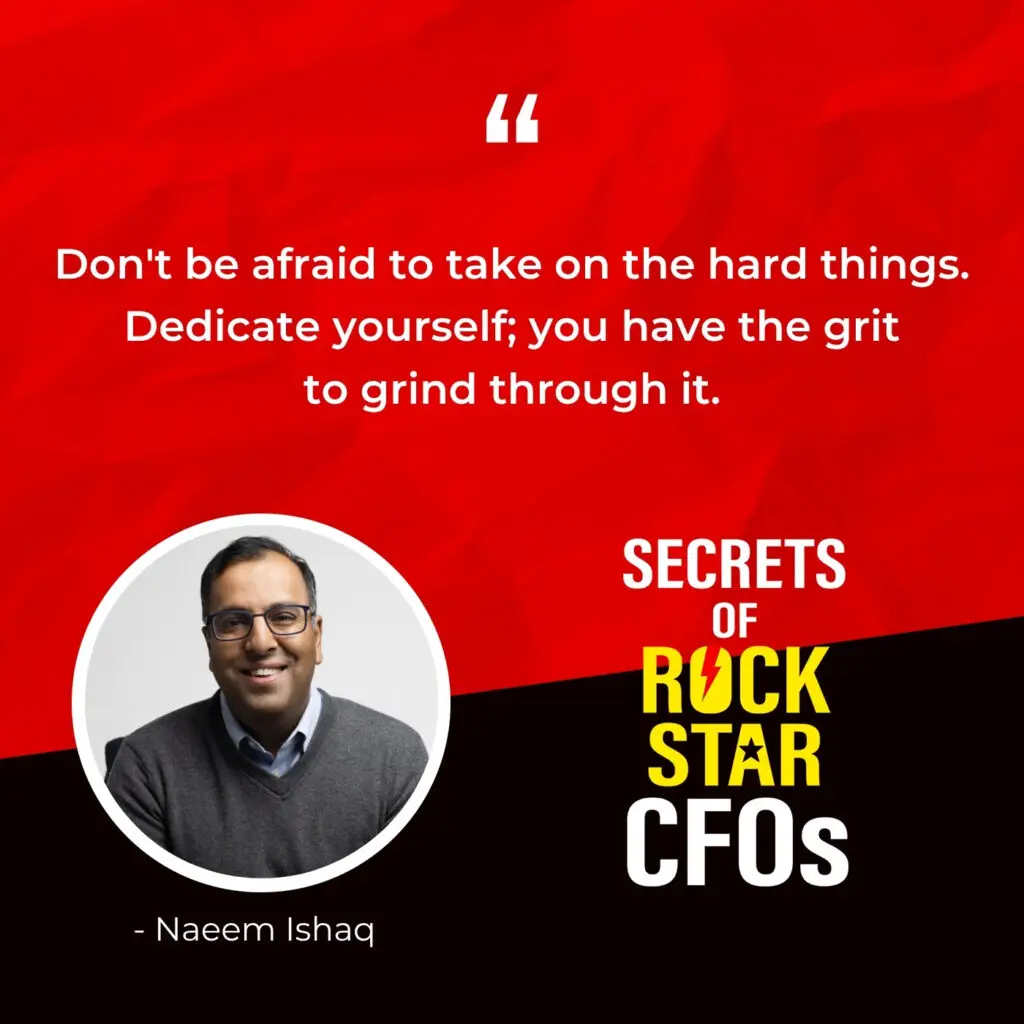
Now as the EVP, CFO and chief strategy officer at Checkr, a background check software company, Ishaq is stepping up to a new challenge. “I think every job transition I’ve had, most people have said, ‘Don’t do it. This is silly,'” he says. “I think that there’s one takeaway from that: Don’t be afraid to take on the hard thing and dedicate yourself. You have the grit to grind through it. I think it certainly has served me well.”
In this conversation, Ishaq shares what he learned from working alongside some of tech’s most notable names, how mentorship and trust shaped his leadership style and why embracing AI and transparency are key to driving lasting change. Listen by clicking below. The Q&A, lightly trimmed and edited for clarity, follows.
—
Listen to the podcast here
Welcome back, everybody. Speaking of Rockstars, we have a Rockstar CFO as our guest. I’ve been looking forward to interviewing him for quite some time. Naeem Ishaq is the EVP and chief strategy officer at Checkr, which helps over 100,000 customers modernize their hiring processes. He has a 20-year history of scaling disruptive growth and businesses from startup to global, and was in the top five percent of employees at both Salesforce and Square, which I can only assume is a really good thing to be. He was instrumental in Square’s successful IPO. He’s raised over a billion dollars in capital and has participated in more than 40 merger and acquisition transactions. Welcome to the show.
Thank you, Jack. Thank you for having me. Far too kind on the intro, but I am happy to be here.
We’re thrilled to be here. Why don’t you share with us what your company does?
Checkr is a late-stage financial backed company that was founded in 2014. Classic Silicon Valley story, two engineers saw a problem in the world where they were looking for a background check API that didn’t exist, and decided to invent that. We were off to the races. We started with the major gate players like Uber, DoorDash and Instacart, and we’ve now spread way beyond that, too. We serve over 100,000 amazing customers of nearly every size and across nearly every industry. We are certainly at scale as well. We last disclosed a couple of years ago that we were doing over $700 million a year in revenue, growing at a healthy clip and are quite profitable, too.
Congratulations. That’s a great position to be in. I definitely want to return to that and some of the opportunities and challenges that you’re facing in your company. Before we get into that, I always like to let our listeners know a little about my guest’s background. Where did you grow up?
I’m a first-generation immigrant. I was born in Karachi, Pakistan. My family and I came to the States, to Orange County in California, when I was one. That’s where I grew up. Through that, being a first-generation immigrant, I learned a lot about the value of a hard day’s work for my mom and dad and my extended family here as well. We’ve been fortunate. It’s been very much an American dream success story.
It certainly sounds like it. When you were a kid, what was your first job you ever had? Not in your professional life, but maybe a job in high school.
As a lot of other Americans, I started out working at McDonald’s, a fry cook. You gain appreciation for a hard day’s work there, too. It’s not easy working in a busy, hot kitchen, but that’s where I began, and it holds a special place in my heart.
It’s funny. It’s so important that I had part-time jobs as a kid. I even tell my friends who are pretty wealthy and, bluntly, their kids don’t need to work in part-time jobs. I’m like, “It’s a learning and character-building thing.” You still like me because I worked at Burger King.
The rivalry goes deep. We’ll let that slide.
Fair enough. Where did you go to school?
I did my undergraduate studies at the University of California at Davis in Northern California.
UC Davis, great program. What did you study there?
I studied managerial economics and minored in organizational behavior. Man econ is like a blend of finance, accounting, quantitative methods, economics, a little bit spilling over to some other things like marketing and so on as well, but a great major and a very quantitative one.
It wasn’t popular if it even existed at all. I’m a few years older than you were when I was in school. From what you described, it sounds almost as if you wanted to be a CFO, which would be a really great major to set you up. I was in accounting. When I became a CFO, everybody had studied accounting, but that sounds like it’s stepping up for all the vital things CFOs need to do.
It very much did. The funny thing is, I didn’t start off with any designs of being a CFO. I like numbers, and I like the big picture, and I think it lends itself well to working in finance. My first real job, actually, I started as an undergrad. I founded a consumer internet company when I was 19 at UC Davis. That was the thing I knew I wanted to work in technology more than anything else. I think the role itself was a little bit more secondary. The major did very much set me up for success and having the right tools at my disposal when moving into finance, and has continued to serve me well.
You started an internet company at 19?
Yeah.
I was still at McDonald’s for God’s sake. We’re on a different level here. We were equal until we were about 17, perhaps.
I was at McDonald’s at 2:00 in the morning while working on the startup. It was great. I’m probably a little older than some of the folks on call, too, but it would have been the late ‘90s, very much the heart of the dot-com bubble. I’m going off on a tangent here a little bit, but one of the luckiest things I think in my life is my dad got us an Atari 2600, and I was probably four or five years old. I think that was my introduction to computing. I started programming when I was barely able to read. I was seven or eight years old, and was a hobbyist computer builder. Back then, even probably around 10, 11 years old, I still actually built my own hot rod and my computers. It’s a real passion of mine. I knew I wanted to perfect technology. Again, I like numbers.
Doing the startup thing was great, experientially. There was a great program called the Sacramento Entrepreneurship Academy that I did concurrently with my last year at UC Davis, as well, which also helped me to pursue that. I felt really fortunate to be in the right place at the right time there. Ultimately, the startup didn’t succeed, though. That’s another lesson here is that we started my career with failure. You had to work out of that, but I certainly don’t regret it.
I forget if it was Edison or Einstein, but one of those otherworldly geniuses, they just never acknowledged failure. I think Edison said, “The experiment didn’t fail. It eliminated one possibility. Now I go on to the next and next.” Good for you. You graduated, and you’ve had a phenomenal career. I think the word icon is maybe thrown around a little too often, but Intel and Salesforce are certainly iconic companies. Square is in that category. Talk us a little about your career journey. You must have worked with some brilliant people.
If there is one strong lesson in all this is to surround yourself with as many brilliant people as you possibly can. After I started by joining Intel in 2002, when it was very much the top two or three technology companies in the world, up there with Microsoft and Cisco, it was probably in that category at the time. Probably someone now gets to where maybe at Google or Facebook might be.
It was very much an Academy company. I learned a lot with some great leaders at that company, but felt like it was starting to go off track and decided to make the leap a little bit more towards my entrepreneurial roots and join Salesforce when it was at the time, relative to where it is today, it’s a pretty small company. I think like a 4 billion dollar market cap, 1700 employees, I believe, when I joined as well. You saw that company just explode, and its growth was at the very front end of leading the charge to enterprise cloud computing.
I did that for several years, five years. Then I joined Square when it was tiny. It was something like 170 employed at Square. Very much a startup. Working with amazing people like Jack Dorsey, Friar, Gokul Rajaram and Francois Brouwer. It was just a hall of fame lineup of people up and down at that company. That set me up really well to move into a CFO role. I joined SBOX Wholesale as CFO after Square. I joined Circle, a stable company, as CFO as well. That was my immediate role before joining here at Checkr as CFO and now chief strategy officer too.
That’s the one. You worked with some of the most talented people in the world. In fact, not that this podcast is about me, but I was giving an interview, and I wasn’t prepared for the question, but I was asked who I thought the best CFO in the world was. I said, “Sarah.” Six weeks later, she left and I think she went to Nextdoor after that. I don’t know her at all or anything like that, but she apparently saw the article, at least was aware of it. I joked, “I’m the reason you got the job at Nextdoor.”
The financial service is Sarah. Sarah was my manager at Salesforce for the last year and a half I was there. When she went to join the Square CFO, she actually brought me with her. That was a great experience. We’re still very close friends. I consider her one of my most important mentors. When you find someone really great, finding ways to continue to work with them, even if that means changing companies, I think, can often be well advised.
I often ask about who the critical mentors are. If I were to tell a young future CFO that they could pick their mentor from anyone in the world, she should be on the shortlist. You are fortunate enough to have a mentor. When you look back and I’m sure she probably didn’t make you better at finance and accounting, but I’m sure she made you a better leader and strategic thinker. What are some of the most critical lessons you learned from her and maybe some other mentors along the way as well?
It’d be hard to pick, but from Sarah in particular, I think her really extraordinarily high and exacting standards are maybe the first thing that comes to mind. I remember this is when we were at Salesforce, she came in to be the SVP of finance and strategy. I was at the time with the leader of our strategic finance team.
Sarah just made it very clear, like everything we do has to be beautiful in addition to insightful, and not going to use the word perfect, but it was implied at the very least. Our teams at the time were not used to, which are internal documents, like why does it need to be so perfectly fit and finished? She was just really clear because people are part of your brand.
People will come to learn to trust the work product based upon what it the full of, the look, the feel, the recognition. If you don’t consistently deliver upon that, you’re not going to be able to drive the influence that you have. That has always stuck with me. I think it pushed me and many others to up our game on those things. It flows downhill from there where you began.
Be more broad about all the great mentors that I’ve learned from. Jack Dorsey is among them. Marc Benioff, I notably think about Daniel Yanisse, our CEO here at Checkr. I think the ability to drive hard for results, but also to be open-minded, and to see a world that doesn’t exist. Jeremy Allaire, the CEO of Circle, is quite remarkable and very inspirational.
It’s amazing. I do ask that question frequently. It’s amazing the impact that mentors have in early career and throughout.
I was going to say, I was fortunate as well, that I think my mentorship started at home. My dad came to the States with $20 in his pocket and a lot of ambition and drive, and has become a really successful entrepreneur many times over. Just the grit and determination I’ve seen from him was incredible. I think about my oldest uncle, Iqbal. He went back to the burger thing. He started, no kidding, flipping burgers at Jack in the Box on the graveyard shift while going to school. Over a 20-plus-year career, became president of the whole corporation.
Just absolutely wild to hear that happening, but he did it, and so learning from him. Last year, I’d say my older sister, Asma, who’s the CEO in the health and beauty space as well. She always believed in me and even when I didn’t believe in myself. I think there’s a lot that I gained from her mentorship, too. I’m fortunate in having that firsthand growing up and then to see that blossom with my professional life as well. I feel incredibly fortunate. Y
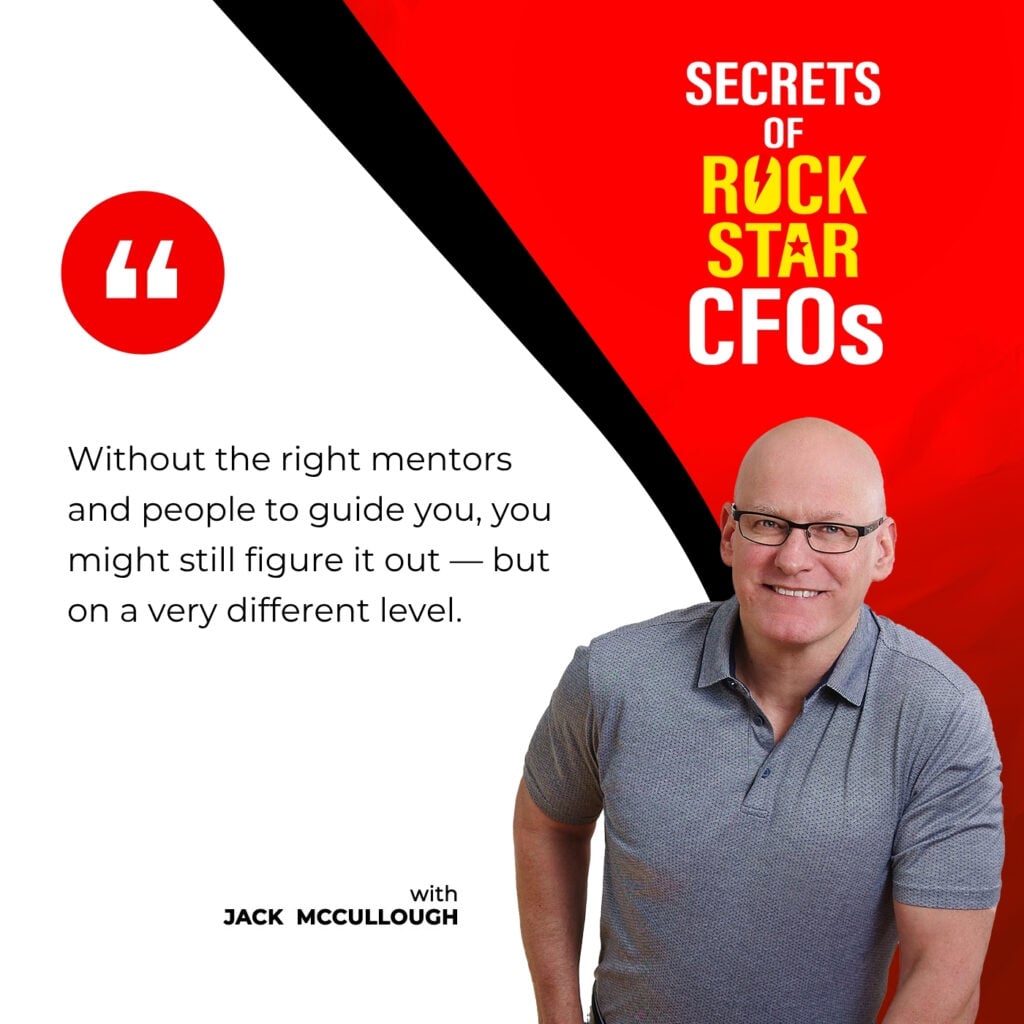
You’re a very smart, dedicated, hardworking guy, but without the right mentors and the people to guide you, you probably would have figured it out, but on a very different level. It’s good for you. Jack in the Box, are they still around?
Yeah, they’re around. They’re in Southern California. They make pretty good burgers too.
I liked them probably because of my name as much as anything. They’ve been in the Boston area for quite some time. Anyway, I want to talk a little about Square. You were involved in the holy grail for financial leaders, the CFO. I’d love to understand what your role was and, perhaps more importantly, what the two or three things you learned from that process were.
We did go through an IPO in 2015. When Sarah brought me over, she asked me to join to run effectively our FP&A team and rebranded and pivoted to a finance and strategy team quickly after that. I quickly also then took on IR after I joined.
When you’re in that early stage, the truth is you’re not a worker defined by function, at least if you’re not, if you’re thinking about the right way. You’re just an owner of the company, and you’ll do whatever is required. As funny as it sounds, that was one of the first growth leaders for Square. I actually helped to start and lead the customer success team, the sales team at Square, which is very unusual for the financing. I quickly handed off to two professionals who knew how to do it better than I did, but I was a fire starter in that way. I ran corporate development for a while.
The big career move that I was asked to take on was to take on effectively the chief risk officer of the company as well. That was a full-stack team from engineering, product management, operations, multidisciplinary general management role. I did that concurrently to also be the head of finance strategy and investor relations, all at the same time, while taking the company public. It’s a very big role. Again, it’s all honored to have the opportunity, but certainly not an easy job.
Not at all. I’d love to share with you about your current role. You’ve been at Checkr for what, about five years?
Almost six years.
How did the opportunity come to you? What was it about that made you say, “This is where I want to go for the next few years?”
I got a phone call from a gentleman named Ali Rowghani. Ali was previously the COO and CFO at Twitter. I knew him more socially than anything, but through the Jack Dorsey universe that exists out there between Twitter and Square. He called me and said, “Look, I need you to talk to this guy, Daniel.” He wasn’t exactly asking. It was more like he was telling me, “You need to go talk to Daniel.” I was like, “What is Checkr?”
He said, “It’s the best company you’ve never heard of.” I was like, “You’re definitely right about one of those two things.” To me, with Daniel, I wasn’t actively looking at the time. Frankly, it was very much inactive. I was not able to move. Daniel and I met in San Francisco. I happened to be there on a business trip. I was just really blown away by the trajectory of the business by Daniel himself, and, really importantly, the mission behind the business to help Checkr.
We do background checks for tens of millions of Americans every year. We tried very hard to also open up opportunities for people who’ve been impacted by the justice system in some way. That really resonated with me. It was attractive. As I mentioned, I wasn’t active. I was very busy with a lot of things at Circle. We had just launched the U.S. dollar coin. We’re doing some significant restructuring at the time.
I told them, “This sounds interesting, but I’m not available, hopefully, a few months down the line.” That was March of 2019. I called them in November, and shockingly, the role was in fact still open. The rest is history. My family and I moved from Boston, where we were with Circle, and moved back to San Francisco, where we spent most of our adult lives. Again, that was about six years ago.
Boston caught my eye. I’m from suburban Boston. Where were you living when you were local?
In the city. I was right at the Lovejoy Wharf, right near the TD Garden. The headquarters is at 99 High Street. It’s a nice, pleasant walk to work every day.
Funny, I worked in 99 High Street. KPMG was in at the time. You made the move to Checker, and you mentioned the CEO and founder, Daniel Yanisse. That’s such a critical relationship. In fact, what I’ve observed for a while now, CFOs have said it’s the most important professional relationship in their careers. In the last year or two, it’s been reciprocated, where CEOs are now saying that their relationship with the CFO is their most important one. I’m curious, you’ve been together close to six years, and he’s the founder, too. Which interesting dynamic as well. How do you build a respectful, productive, strategic partnership with the CEO and founder of the company?
I think that the root of it is certainly trust. The root of trust is transparency. Being able to have a direct conversation, being able to be a truth teller, I think important for any CFO is you have to be more than perhaps any other role. A real truth teller and not afraid to call it how it is, and to be able to shine light on things when they’re not going well. I would say just equally importantly, when things are going well.
In some ways, I think my role in any good CFO’s role is like the pendulum. When the momentum is swinging the other way, it’s bringing it back to center. I think with Daniel, that’s been a lot of that is to be really committed to each other. Sharing the entrepreneurial roots is helpful because I have an appreciation for how hard. I’m not sure there’s any job in the world that’s more difficult than being an entrepreneur.
If you haven’t done it, it’s hard to really appreciate just how challenging that is. I have so much deep respect for him and Jonathan, his co-founder, for what they’ve been able to build. I think having that trusted, deep, honest relationship is so important. It’s almost like a sacred relationship. One of the things I know Daniel, and I really appreciate this, he’s shared with me is the other there are certainly two, and maybe only two, roles in the company where, in the end, your personal accolades and accomplishments mean nothing beyond the extent to which they help us to achieve our world goals as a company.
We rise and fall together, and we need to create a united view in terms of the vision and the direction for the company to offer our stakeholders, including very much for support and our resource holders, the rest of the executive team. I think it’s been an incredible journey working with Daniel, like any business, and we’ve had our ups and downs over the years, and we’ve always come out stronger, but we’ve had to make some incredibly hard decisions along the way. It’s been great to be working by his side and helping to be a part of that.
What do you think are the biggest opportunities for CFOs in terms of using generative AI that they’re not doing it now because they’re not embracing it quickly for data security and privacy reasons the way the rest of the C-Suite is?
There are narrow answers, which can apply to automation and workloads, and so on. I think that the more interesting and important answer is to be the driver of change within the company. I think back to here at Checkr, so around the time that ChatGPT had launched, it must have been about three years ago. I took that as an opportunity to say, really draw attention from the rest of the executive team and say, “Look, this is truly the start of the next big wave in computing.”
This has been working and brewing in the background, but now the gun has fired, and either we need to run ahead with this or we’re going to get run over by this. I have been the executive sponsor and champion of our AI efforts for the company here since that time. Those are broad in nature. It goes across from things like developer velocity and innovation, go-to-market acceleration, operational efficiency and employee productivity. There are so many applications.
Giving people the mandate to say, “Look, we all need to get on board here and adopt this.” Also, in the CFO seat, being the enabler to say, “We’re going to give you the tools to be able to go forward. We’re going to actually create by doing this and spend more so that you can get better.” Importantly, this is in service of the company ultimately, but it’s also in service of the individual. If folks do not adopt these technologies, they become irrelevant really fast.
I, including all of us, am in this world. Being able to communicate that to the company and lower the anxiety it often causes people to see AI and how powerful it is. Their initial reaction is often fear, but bringing forward a positive message of reinforcement and saying, “You shouldn’t be afraid of this, you should be enthused by this, and knowing that this can help you become superpowered as an individual, as a team, as a company.”
That’s where we’ve been able to make a lot of progress. We have a couple of innovative things. For example, this might sound funny coming from the CFO, but we told all employees that you have a budget allocated to try whatever new AI tools you want. You don’t need a lot of permission. You can just go for it and expense it. That’s been great because it’s changing so fast. We’ve seen a lot of tools proliferate and be adopted. We helped to centralize those.
When we really want to double down on those as well. In working to bring forward new ideas to shine light on them to things as our all-hands meetings, our employee newsletters and so on. Setting really stringent goals for what success looks like, and you do these key areas. That has helped us quite dramatically. I’m proud to say, Checkr is very much at the forefront of AI adoption in terms of our workforce.
It’s important to remember that at the very core of what we do at Checkr, we succeed in disrupting a legacy business because we’ve adopted AI and relied on AI through the form of machine learning from the very beginning. That result is we can deliver results that are faster, more accurate and easier to use because we are a natively AI business. With the advent of course of generative AI here over the last few years, that just puts that into even more of an overdrive mode. It’s been great so far, and we couldn’t be more excited about what’s coming there.
That’s an exciting time to be in the workforce with technologies like that. One other thing I’d like to ask about you, and it’s interesting because it’s an entrepreneurial company, fast-paced, fast-growing, and yet you’re in an industry that I have to think is probably pretty tightly regulated. As the CFO, you probably don’t get up every day excited about compliance and that thing. How do you juggle those two things? It does fall upon you. If you have an in-house counsel, that person as well. How do you reduce compliance, but don’t kill the entrepreneurial spirit of the company?
This is a little bit of a somewhat open secret. The best businesses are those that are hard to understand and often are regulated in some way because they’re really hard to crack into. This is actually insight from Keith Rabois, who is a coworker of mine at Square, and he famously a venture capitalist, a very successful one at Khosla and Founders Fund was one of the PayPal mafia folks as well. There’s a pattern.
If I look back to the companies I’ve worked at recently, Square, Circle and now Checkr, all were difficult, hard-to-understand problems, not sexy in a lot of ways and regulated. That creates an opportunity where folks, by default, don’t want to innovate because they’re afraid to. If you can come in with the beginner’s mind and take a fresh sheet approach to solve those problems and questions, “Why do we do these things this way?”
You can create new opportunities and really succeed and build as well, incredibly deep boats around your business. That is something that I might argue. I actually look forward to it. It’s one of the things I find attractive is when you can find businesses like that, because it can be incredibly durable. You have to honor the responsibility. Businesses are regulated not for fun, but because there are severe risks and consequences of business practices that don’t adhere to the standards we have in society.
The work that we do, we manage incredibly sensitive data, but also relevant to your personal history and things like your criminal record, your driving record, your health records. We have a huge degree of accountability and responsibility that we feel to honor that for all the, again, now tens and tens of millions of people that we’ve screened over the years and continue to screen every year. We make sure that we invest to support that responsibility as well.
That makes a lot of sense. I think of Silicon Valley or San Francisco Bay as a bit freewheeling. Let’s just get things done. You’re in an industry where you cannot really do that. Yet you’re still supposed to deliver. It’s just a different challenge than a lot of your peers might have.
It is a different challenge. That’s where I think the magic can happen. I think back on my time at Circle. Circle fought for years and years to be able to bring stablecoins into the market and to be able to move money over the open internet. There are like trillions and trillions of dollars at stake. There are geopolitical issues. There’s like sovereignty at risk. This is like really important critical stuff that is at play.
That’s why it was such a grind. Circle, it took us many years, many ups and downs to be able to figure out how to make this work, how to get live in the world, how to succeed and thrive. Thankfully, we’re in a place where, “What’s this?” Recent IPO and folks can see its financials, like companies performing incredibly well. That’s into the well over a decade of hard fighting against these, the calcified structure that’s in place that doesn’t want things to change to move to a better world where we do have more liquidity, we have lower fees, better access. These are all things that, as consumers, we want.
That makes a lot of sense. I want to check also your company, fundamentally a technology company, I suppose. How do you use data and analytics within finance to drive decision-making and not only within finance, but maybe company-wide as well, because you’re sitting on an awful lot of data?
We are in, and yes, it’s very much in the DNA and has been for a long time. I think one thing I’ll double click on is coming back to the generative mode is we’ve put a lot of investment over the years now into using General AI for forecasting. We have a consumption-based business. For anyone who has a forecasted consumption-based business, it’s not exactly easy, and it’s quite complex and can be quite volatile.
We’ve made great strides in leveraging that. Ultimately, you have to have the right pipes and data feeds to make that work. That’s also complicated by businesses when you make acquisitions and make all the plumbing work behind the scenes, which we have certainly had to do over the years as well. That’s been a really important part of the progress we make as a company. Ultimately, the culture of flying by wire and having really clear definitions of success criteria at the onset of any major project, having a culture of being able to do and mandating that we do retros to learn from successes and failures.
We reincorporate that back into how we operate the company. Lastly, I’ll note that Checkr, we made the move actually, Daniel and I implemented this shortly after I joined, of being a long-form culture. Away from slides and PowerPoints, towards memos very much inspired by Amazon and its approach. That I think generally just works really well. It’s actually hard to go back to slides when you’re forced to write out your thoughts in long form.
The best part of that is being able, it forces you to be really crisp in defining what they’re trying to say, and the problem you’re trying to find, and what the solutions you’re proposing. It also creates this incredibly rich data set because virtually every business discussion decision we’ve had as a company is documented in long form. We now ingest that information into our models. We’re able to train these models with this incredibly information-dense data set that we have, and that helps us to just make better decisions going forward as well.
That makes it essentially, I think, Amazon. They probably didn’t invent it, but they were the first ones that famously say no more PowerPoints. Bezos or whoever just wasn’t a fan of that tool. I don’t know, I’m still PowerPoint dependent myself. Probably because I ramble, as you may have picked up on, but like when up on stage. When I don’t have PowerPoints or cue cards, it’s like, “Who knows what’s going to come out of my mouth?” Just a lack of discipline there. One of the things I do like about interviewing non-CPA CFOs is that they measure, think, and evaluate a little bit differently. I’m curious, do you have any favorite KPIs that you use to measure and report business performance?
Yeah, I don’t know if I have any major favorite KPIs. It depends. The real critical talk here is understanding the context in which you’re operating and making sure you effectively say, as they say, that you use the right tool for the right job. KPIs are a tool to guide business decisions, to inform your progress against your goals and so on.
Whether it’s a business where you’re in being subscription business or a consumption-based business or a consumer-based business, they all have different KPIs that are important. Those KPIs need to fit within the context of the broader strategy that you’re trying to pursue. The danger is that you choose the wrong KPI, and you might be succeeding on that measure, but you’re actually going off a cliff because it doesn’t matter.
I’ll give you a recent example. Checkr has launched very recently launched a consumer product that we’re very excited about. It’s starting to monetize really well, which is great too. In this case, again, quite certain that revenue is not the right measure for us to be optimizing for. It should be user engagement, virality. Those are the measures that will drive long-term revenue growth. Being overly focused on your revenue growth might actually be productive to the overall strategy and direction. For me, it’s actually less about the specifics of the KPI, which is the right KPI for the right job at that right time.
That makes a whole lot of sense. One thing I want to talk to you about, you’ve got a lot going on right now. CFO of a busy company, but you’re on two different boards of directors, and I’d like to explore that a little bit. Tell us about those companies and how they came about, and you’re on another one that will that’s a board, but Checkr.org is a little bit different. Let’s talk about Foodics and OutSchool.
Foodics, I’ve been on the board. It’s a fintech company. I’ve been working with them formally on the board for about six years and was informally an advisor for a couple of years before that, too. Almost the whole history of the company. They had reached out to me blindly over a LinkedIn request while I was actually way back when I was still at Square. It’s been quite a long time and an incredible business. One of the real innovators in the region, and I think good things are ahead for it for where it’s going. I also serve as the chair of the Compensation Committee. Not exactly the easiest job in the world. It’s fraught with conflict, of course, but an important one. I shouldn’t denigrate that.
More recently, I joined the board of OutSchool, a tech company based out of San Francisco, and was an advisor for two years before that, too. I knew their founder CEO was a coworker of mine from Square. Again, the Square mafia is quite strong, and it’s been great to work with that team and a very different lens. Fintech is a little bit closer to what I’ve done historically. It’s not something I’ve ever worked in, but I’m a father of a young child, and it’s near and dear to my heart as well, and helping to improve and evolve the educational system. That’s been great.
Checkr.org is a different angle. It’s a philanthrope with an arm that I was fortunate to help co-found. It’s been probably about four or five years ago now. I’ve served on the board of that from the beginning, and we’re doing a lot of great work. We’re a proud member of the Pledge One Percent community. For those folks who don’t know, we pledge one percent of our company equity, which is a big number, along with one percent of our profits, to this 501(c)(3) nonprofit organization. We’re doing a lot of great work to help people find opportunity with a special focus on folks who have been formerly incarcerated.
That’s great that you’re doing that. If I may ask, what motivated you to do that?
It’s a great question. I care. I started a small foundation with a friend back when I was at Intel that was focused on helping to fight climate change. When I came to leave Intel and was looking for my next job, I was talking to folks at Salesforce, and I learned about the 1/1/1 model, which is what Pledge One Percent is based on. That was actually what started with Salesforce and Marc Benioff specifically.
It’s very inspirational to say, “You can have a great business that’s generates lots of profits and revenue growth, and so on, you can also do good in the world. We’re going to make it a corporate priority to go do that.” I was very inspired by that. When I met Dan, our CEO, that first time and heard about the mission of the business, even back when, during my first interview, I said, “Daniel, this sounds amazing. Do you have a formal effort around this? If not, can I help you get that going?” He was like, “I’d love to go do that.”
About a year after I joined, I revisited that conversation and we got it moving. It’s not easy going to your shareholders and say, “We’re going to carve off one percent of our equity for this purpose, with a lot of hard work and persuasion and support, most importantly from our two co-founders who are, of course, the biggest shareholders in the company to say, “Yes, we care about this and we’re going to come out of our own pocket to make this a priority.”
We’re able to get that done. It’s been off to the races since then. In the end, it’s just you go back to your previous comment, Jack, like we’re so fortunate. Just being an American, I feel so fortunate to have an opportunity to even be in this country. I’m an immigrant, and this country has given so much to me and my family. We’ve been so fortunate to be working in tech and be part of the real engine of our economy. Anything I can do to help give back, I think, is an honor and a privilege. That’s where that was rooted.
That’s very good. On a business note, these are great things that you’re doing. I’m curious, so you’re on two traditional boards and then a founding board member of a nonprofit. Does that change how you approach your role as a chief financial officer? Are you maybe more empathetic to board members or whatever? Does it just change how you approach your day job?
One hundred percent. In fact, that’s the exact word I use, as it gave me so much empathy when you sit on the other side of the table. The biggest takeaway is that you realize just how little context board members have about the business. Before that moment, I would go in and say, “We talked about this last board meeting. We send you monthly updates and go through this.” That is true. Board members spend five hours, 10 hours a quarter, if you’re lucky, thinking about your business. You spend 100 hours a week thinking about your business. It’s such a disparity. Because we’re biased, of course, they know they’re part of the team. This is true. They are part of the team, but remembering to slow down and restate, reestablish and really distill the information is probably the biggest lesson I’ve had from that. I think that’s maybe better in my job as a CFO and an executive.
The other part that’s really been eye-opening to you is that it just keeps you mentally sharp when you see different problems. Again, I love my business, and I love working on our problems, but those are deep problems, and we’ve worked on them for years and years. It gives you some exposure to different types of problems and different contexts. Foodics is outside the U.S. It’s the first time I’ve worked at a company that wasn’t American-based. Our school, as a tech company, is an area that I’ve never worked in at all.
It’s understanding how they think about value creation and how they think about working through their business challenges and opportunities. It’s brought a lot of business ideas to me that I’ve helped to try to play here at Checkr. I think it’s very much a two-way street. Certainly, I try to bring my expertise and experience to bear at those companies, but I feel like they gain as much, if not more, out of that as a board member.
A lot is going on, and all work in no play makes this case makes Jack a dull boy. Do you have any hobbies or maybe any outside interests that have nothing to do with your professional self?
For sure. I would be remiss if I didn’t mention my daughter first, and my seven-year-old is my whole world. She and I love to go bike riding with my wife. We also love to play video games together without my wife. Her favorite game right now is Ultimate Chicken Horse. Great game for all ages. We love, and then more independently, I’m a very avid baseball and football card collector. That’s probably my primary hobby. I love sports as well. It ties back to that. I thought doing grading and submissions and things that nature has been a lot of fun.
Good for you. What’s your daughter’s name?
Cora.
She’s seven, you said?
She’s seven years old, going to second grade next week.
Fun age. Good for her. Getting back a little bit to business, love to get your perspective. CFO roles change quite a bit. It’s actually changed quite a bit, even since you’ve been in your most recent role. When you look ahead, not that you have a crystal ball, how do you see the nature of the CFO changing in the next few years?
Maybe just certainly a continuation of the broadening of the role from more of what they always say, the scorekeeper, the person who will report the news, but not make the news, to being very much expected to make the news too. I see that, in fact, they’ll just continue to accelerate. The merger of technology and all job functions is, it’s not isolated to a CFO role, but I think it will hit us quite strongly. I’m an active angel investor in my limited free time as well.
It’s really fascinating seeing all the new AI-first, agentic-first solutions coming out in the offices of the CFO, whether it’s procurement or ERP, accounting or cash management. This is incredible. Continue to evolve and push those things forward so that the enterprise can thrive and become more efficient, but then also grow even faster and make the jobs more rewarding. I don’t know that anyone loves following routine checklists as part of their job. If that can create an opportunity for them to do more outside of that, AI is a great way to get there.
You touched on it, but I do like to ask if you have any advice for the next generation of CFOs. Maybe those people whose next job’s likely to be a CFO type role. What should they be thinking about to not only get the role but also flourish once they have the opportunity?
Just don’t be afraid to go after the hardest problem. That’s the simple truth. In fact, I think every job transition I’ve had, most people have said, “Don’t do it. This is silly.” Frankly, when I founded my startup, I was ridiculed. People say, “What do you think you’re doing? Why are you turning on these amazing big companies?” I said, “No, I’m going to do that.” It was an amazing learning experience.
When I thought about leaving Intel to join Salesforce, nine out of 10 people said, “That’s a huge mistake. I’ve never heard of this company, Salesforce, and Intel is a time in the industry. It’s a bellwether. You’re doing great. What are you doing?” Same thing. Why I left Salesforce to join Square, nine out of 10 people said, “This is crazy.”
This guy, Jack Dorsey, he’s a Twitter guy, he’s about payments. Tough competitions, little margins and on and on. Every time it’s gone after that. I said, “No, but you think about it carefully.” I’m like, “One, these are hard problems for sure, but out of hard problems, you come out with a lot of value. If you can be willing to fight it out, then you’re going to do great.”
I think that there’s one takeaway from that: Don’t be afraid to take on the hard thing and dedicate yourself. You have the grit to grind through it. I think it certainly has served me well. Again, I guess there’s a corollary to that, too is not to follow the crowd. The crowd is often wrong, especially if you want average results. Following the crowd is a great path. If you want extraordinary results, it’s just almost never going to work by definition. I think that has been an important part of the success story here, too.
I think I’m stealing that quote. If you want average results, follow the crowd. That’s a wonderful quote. That said, look, I know you’re really busy. On behalf of the audience, really grateful for you taking the time to be with us and whatnot. With that, I’d just love to give you the final word.
I’m going to steal this from the internet. You can just do things. We’ll close with that.
Perfect.