The headlines can’t seem to agree on where the economy is headed—and neither can business leaders, economists and most importantly consumers. Stock markets boom while millions of wage workers strain under high prices. Jobs reports swing from strong to weak month to month. And a policy environment that shifts weekly makes planning feel almost futile.
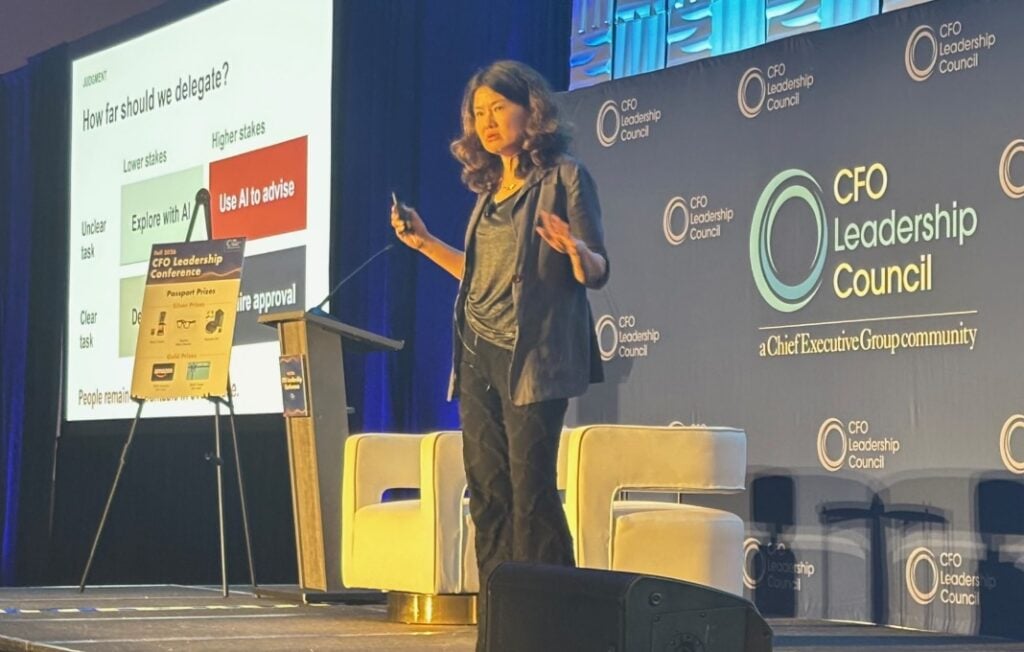
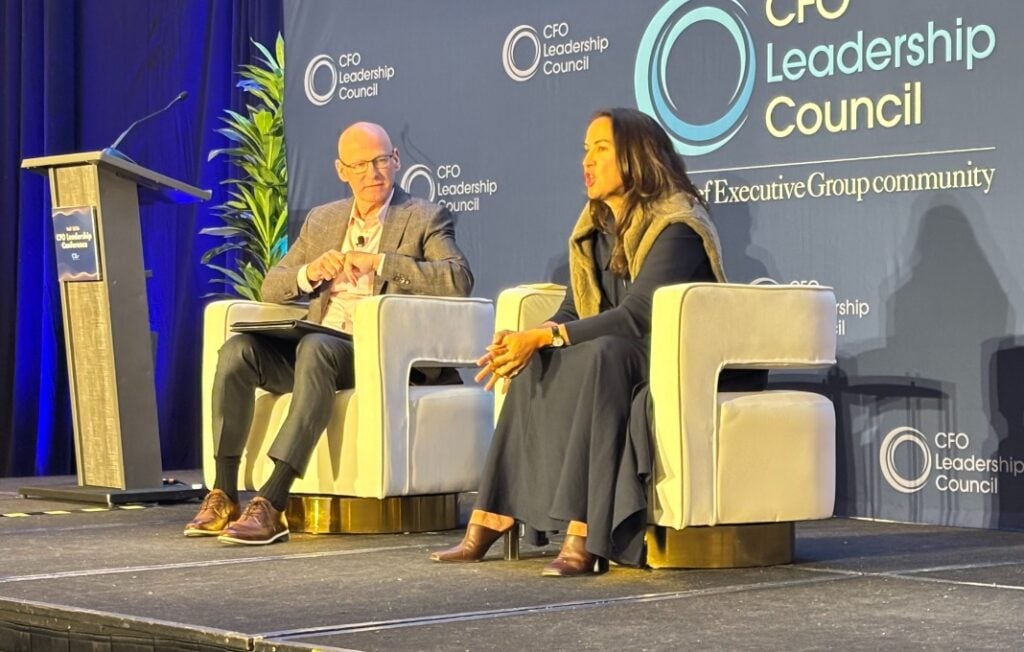
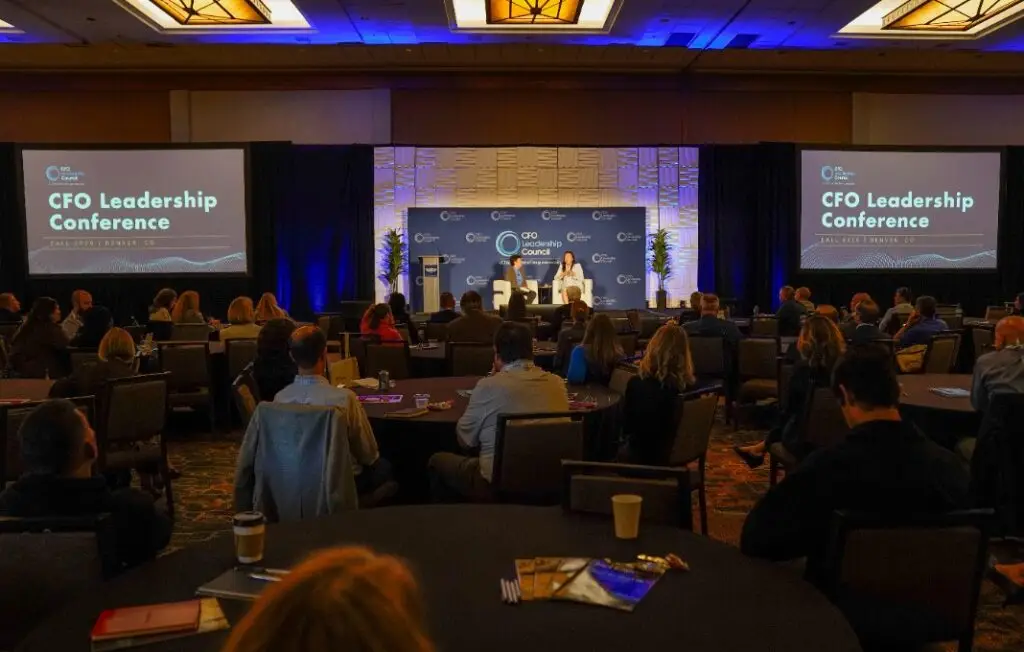
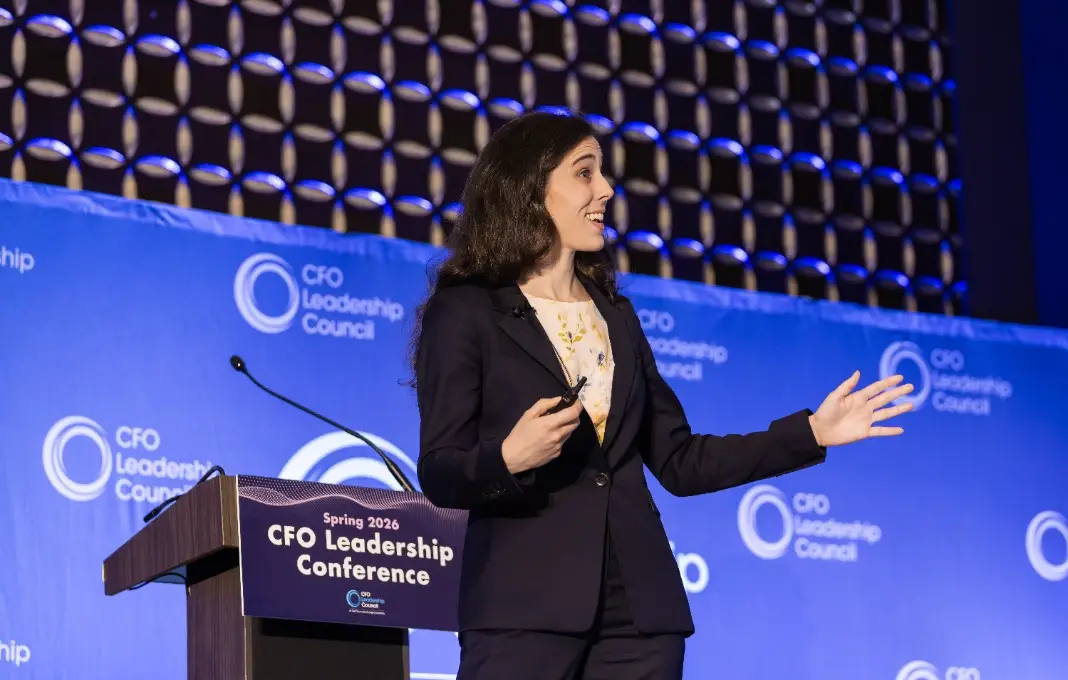
Emily Mandel, senior economist and associate director at Moody’s Analytics, came to the CFO Leadership Council’s 2026 Spring Leadership Conference in Boston for their read on what’s happening—and what might happen—and what CFOs can be doing about it.
Her bottom line: The baseline isn’t a recession, but the risks are real, asymmetric and worth stress-testing against now. Here’s the economic picture she laid out.
The Strait of Hormuz will remain the No. 1 watch item. The conflict blocking one of the world’s most critical oil shipping lanes is the biggest near-term risk to the U.S. economy. Ship traffic through the strait has fallen to near zero—and unlike financial shocks, oil supply disruptions don’t reverse quickly. Countries burned through their stockpiles to buffer against price spikes, but that buffer is largely gone.
Mandel’s baseline assumes the strait reopens by roughly the end of June. If it does, oil prices—currently near $100 a barrel—normalize gradually but don’t snap back to prior levels. If it doesn’t, the math gets ugly fast.
“If we keep the strait blocked through Labor Day, we’re looking at a very dark scenario. That would be a recession—and because the U.S. is relatively well-positioned and produces a lot of oil, if the U.S. is in recession, the rest of the world is going to be in recession as well.”
Tariffs remain a persistent drag, not a one-time hit. A year after Liberation Day, the effective tariff rate has climbed from roughly 2 percent to around 10 percent. The Supreme Court’s recent ruling that a portion of the tariffs were illegal didn’t change much—the administration moved quickly to implement similar levies under different authority.
Mandel’s read: The tariff rate stays roughly where it is. The price pass-through took longer than expected, but it’s happening. For CFOs relying on imported inputs, this is a sustained cost pressure, not a temporary one.
Immigration restrictions are tightening the labor supply—slowly. Both legal and unauthorized immigration have fallen sharply, reducing the available labor force. So far the economic impact has been muted, largely because hiring has slowed enough that the tighter labor pool hasn’t created significant wage pressure.
But Mandel flagged this as a slow-building risk: Over the next couple of years, industries that depend heavily on immigrant workers—agriculture, construction, manufacturing—will likely feel more strain.
AI is a genuine tailwind, but not yet a productivity story. The AI boom is contributing to GDP growth primarily through capital investment—data center construction, infrastructure buildout, equipment purchases. Business formation is also up in industries with higher AI adoption.
But the productivity gains that equity markets have priced in haven’t materialized yet in the economic data. “There’s promise and yes, that’s being priced into equity valuations, but the contribution so far has been mainly in terms of investment.”
The consumer is holding on—but the cracks are showing. Consumer spending is still positive but slowing, and the composition is increasingly worrying. Most of the spending growth is coming from top-quintile households whose wealth has appreciated significantly.
The bottom 80 percent are dealing with higher gas prices, sticky inflation and stagnant real wages—and they’re starting to show it. Credit delinquencies are rising across mortgage, auto and student loan categories.
Tax refunds provided a short-term buffer against higher gasoline costs, but that buffer is now largely spent. “If those high-income households pull back even a little on their spending, we don’t get that same growth—because the lower end of the distribution doesn’t have much in reserve right now.”
Rate cuts aren’t coming. Rate hikes are possible. The Federal Reserve is watching both mandates move in the wrong direction simultaneously—unemployment edging up toward 4.3 percent and inflation re-accelerating.
Moody’s baseline is flat rates through this cycle, on the theory that the labor market isn’t strong enough to justify hikes and the Fed will treat the energy shock as temporary. But the probability of a hike is rising. For CFOs with variable-rate debt or refinancing decisions on the horizon, flat-to-higher rates should be the planning assumption.
What CFOs should do with all of this. When asked directly how finance leaders should navigate this environment with their teams and employees, Mandel stressed transparency and scenario planning rather than false confidence. The headwinds are visible to everyone—employees read the same headlines CFOs do.
Her suggestion: Present your base case clearly, name your two or three biggest concerns explicitly and sketch what the business looks like under each scenario. In an environment this uncertain, honesty about the range of outcomes is more credible—and more useful—than a single-point forecast.
“Be upfront about the unknowns—and there are a lot of unknowns in the current environment,” she said. “That’s not a secret to people.”