Building “perfect” financial models may be doable for established companies, but for startups, where uncertainty often rules the day—not so much.
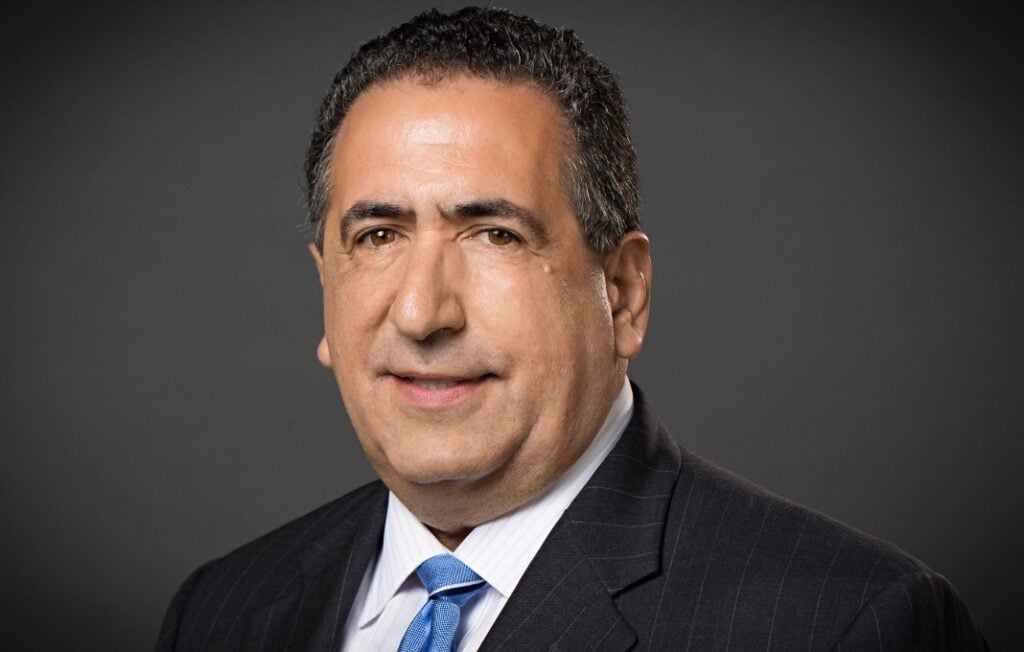
Jayesh Patel has served both sides of the spectrum. Patel is now CFO of Nexar. The New York City-based company enhances the training of self-driving vehicles by providing AI-powered models based on real-world human driving data.
Patel brings more than 20 years of financial and commercial leadership experience across technology, mobility and high-growth companies including Hertz and global management consulting and technology firm ZS to his work. He has successfully scaled strategy, finance and commercial organizations through rapid expansion, overseen transactions and led strategic initiatives for long-term value.
At Nexar, Patel oversees all aspects of finance, accounting, strategic planning and corporate development as the 11-year-old company accelerates its growth trajectory. He spoke with CFO Leadership about how AI is impacting his work, how the role of the finance chief is changing and why CFOs should look beyond finance.
You’ve worked at both startups and established enterprises. How has your approach to financial leadership evolved across different stages of company growth?
Early in my career, especially in larger enterprises, I focused heavily on building perfect financial models and deeply validating every assumption. Precision was everything—and that approach had its place.
But in the startup world, I’ve learned that speed, adaptability and decision-making under uncertainty are often more critical. You rarely have perfect data, and if you wait for it, you risk missing key windows of opportunity. I’ve grown more comfortable making decisions with incomplete information, so long as I understand the key assumptions and the range of potential outcomes.
As a financial leader, it’s now just as important for me to provide clarity and momentum to the team as it is to drive rigor. That shift—embracing ambiguity while guiding others through it—has been a defining evolution in my leadership style.
With AI transforming everything from forecasting to operations, what’s your perspective on how finance leaders should adopt or guide its use?
AI is no longer just a futuristic concept—it’s an active and essential tool that’s reshaping the way finance teams work. I see two core opportunities: automation and augmentation.
First, we’re using AI to automate repetitive, low-value tasks—like processing data or building routine reports—so our teams can focus on higher-impact work. Second, AI helps us work smarter by quickly analyzing complex datasets, identifying patterns and generating insights that would take humans far longer to uncover. I encourage my team to experiment with different tools and use AI to stretch what they’re capable of.
On a personal level, I’ve found AI incredibly helpful for sharpening written communication. Whether it’s investor updates or internal messaging, it’s helped me be clearer and more effective. The combination of analytical power and enhanced communication makes AI a uniquely valuable asset for today’s finance leaders.
What’s one initiative you’re currently leading that redefines the role of the CFO beyond traditional finance—and what’s the takeaway for other CFOs looking to expand their strategic influence?
My mandate and scope at Nexar aren’t what you would traditionally think for a CFO. One initiative I’m deeply involved in is helping to define and communicate Nexar’s brand narrative across all our stakeholders, from investors and employees to customers and partners.
Traditionally, CFOs are seen as stewards of the numbers, focused on financial reporting and resource allocation. But I believe today’s CFO must also help shape how the business is perceived: why it matters, what makes it different and how it wins.
At Nexar, that means connecting our business model and financials with a compelling story about our mission, our technology and our market position. It’s work that draws on my background in both strategy and commercial leadership, and it’s proving to be a powerful lever for alignment and impact.
For other CFOs, I’d say, don’t limit yourself to the financial domain. The more you help craft and communicate your company’s broader vision, the more influence—and value—you bring to the table.