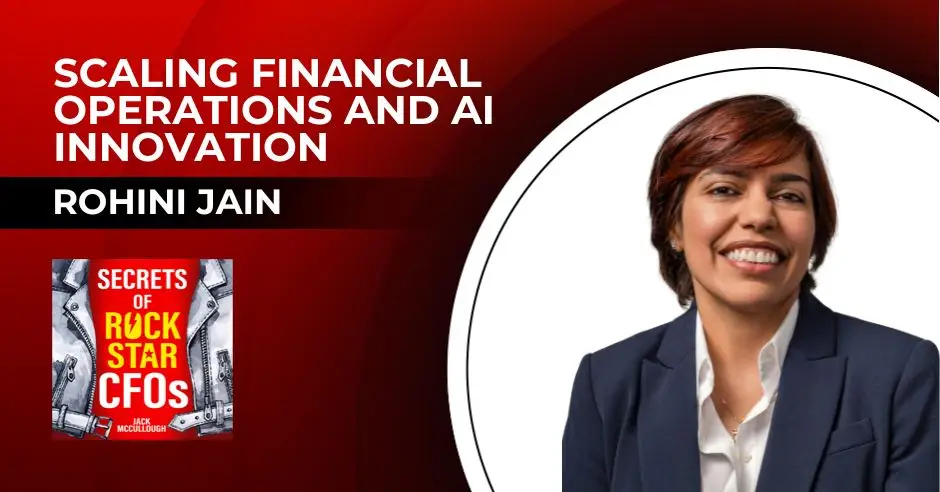
Rohini Jain‘s career has spanned some of the biggest names in business, including GE, PayPal and Walmart. But as the CFO of Bill, a fintech that automates back-office money workflows for small and midsize businesses and accounting firms, she is now contending with AI’s impact. That means imagining a future where Bill itself fades into the background a little.
“Think about it. Bill becomes a big part of your life without being present,” she says in conversation with host Jack McCullough. “In five years, success would be where all kinds of customers say, ‘I’m not going to go through the process of uploading my vendors or do this or do that.’ They just get access to two or three things like Gmail or whatever to Bill, and everything gets done in the background.”
In the most recent episode of the Secrets of Rockstar CFOs podcast, Jain dives into how she is setting up Bill for an AI-first future as well as her journey to a CFO role and how she has put together a finance team for long-term success. Listen by clicking below. The Q&A, lightly trimmed and edited for clarity, follows.
—
Listen to the podcast here
Welcome back to what was going to be a great episode of the show. I am particularly excited about this guest for a number of reasons. One, she certainly is a rockstar CFO by any definition. She is working for one of the hottest companies in the game. Most importantly, perhaps for me, I am actually a client of this company.
I can actually have an intelligent conversation on the company’s business model. That is not always the case in my case. I’m really excited to be here. I am joined by Rohini Jain. She is the CFO of Bill. Bill is a leading financial operations platform that helps small and mid-sized businesses automate the way they pay bills, send invoices, manage expenses and control cash flow, all through a single AI-powered platform. Rohini, welcome to the show.
Thank you so much. I am so excited to be here, but even more excited that you are a customer. I did not know that. That is awesome. We should talk about this later.
A happy one. I am not the CFO of my company, so as much as I would like to take credit and get some loyalty there, I am just a very happy user because we have had some other stuff that I was not as excited about. This is great stuff. I have been accused once or twice in my life of maybe oversimplifying things. Can you maybe expand a little bit about Bill from what I said?
What you articulated really nicely, Bill, what we try to do here is, if you are an SMB business, we try to take out all the mundane work that you have to do to run the financial operations. Most of the SMB owners are not finance or CFO people. They do not want to deal with all that. All they want to focus on is growing the business. What Bill does is come in and help run their financial operations in the background.
We started with nice automated workflows, with evolution into how we do the work with you. Now we are making a big leap with AI to do the work for you. How these workflows start to disappear with the human in the loop, and you are just able to manage the business in different contexts and through chat and other things over time, is where our vision is.
It is definitely a game changer for those who are not using it. In the SMB space, we certainly qualify. Before we get into it, and I do look forward to that, I always love to have our audience get to know the CFO a little bit about their own background. Where did you grow up?
I grew up in this small town. I say small with a caveat. When I was growing up, that town still had a million people, give or take. Small town in India and the foothills of the Himalayas, a really well-planned city called Chandigarh. Uniquely, a couple of things in my family I would love to call out while growing up. Number one was that I grew up in a joint family, which is not something that we hear of here, but in India at that time was somewhat common, where my parents, my grandparents and four of my father’s siblings lived with their families there.
We grew up with 12 cousins in the house, and it was wonderful. It really teaches you very early on how to work with people, how to have fun with the big family and things like that. Secondly, I think growing up, one of the things that was also unique in our upbringing, my sister and I, my dad really pushed us to be financially independent. He is like, “I do not care if the guys in the family are or not. As women, you need to be and take control of your finances.” Those two were really interesting parts of my upbringing.
That is fascinating. I have always been jealous. We do not have what you call a joint family, but I lived in a town with a lot of two-family houses, and a lot of times the cousins were living on either side. I was always jealous of that extended family to a degree.
We are so tight.
It is like your cousins are your siblings. There is a certain bonding that happens with a big family. I am perfectly close to my sisters, and I would not want them to listen, so I would not want them to think otherwise. There is just something special about growing up with a lot of your generation. Fantastic. I know you studied accounting. You got a master’s in finance at the London School of Economics. I am curious, look at you, obviously that was a fantastic decision you made. What was the thinking around that, that you wanted to go into business and accounting and finance in particular?
This is a funny story. I always gravitate towards the unknown and things that are new and different. Like all good Indian mothers, my mom really wanted me to be an engineer. I was standing in the queue in my school to pay the fee for the engineering enrollment, and right next to me was what we call in India the commerce line as well, where a bunch of kids were discussing, “I am so excited to study corporate law, and I am so excited to go deeper into economics and accounting and stuff.” I am like, “This is not something I have done all the way until high school, whereas physics, chemistry, everything else we had done and were quite familiar with.”
Literally one person away from the line to deposit the fees, I switched. I switched into commerce literally at the last minute. I was terrified to go home and tell my mother because she really wanted my older sister to be an engineer. She ended up being a doctor. She wanted me to be an engineer next. I ended up being whoever I am, CFO. My younger brother, she also wanted him finally, her last chance to have an engineer kid, and he ended up being a lawyer. She does not have an engineering kid. That is the story of how I got into the finance world.
It is funny. I had another CFO on, CFO of AT&T, he has like five brothers and sisters, and they are all professors. There is like a medical doctor and like three or four professors and him. He is like the black sheep of the family because he went into business.
I feel the same way.
What was your first job, maybe when you were a teenager. I do not mean babysitting, but something after babysitting, but before college graduation.
I off and on taught. I feel very passionately about education generally, but off and on taught neighbors, friends got paid for it. We were supposed to do an internship, articleship, we call it there. I had done it for about two years when I realized, “I do not want to actually be a CPA for the rest of my life.” I will tell you why. The two audits that I got engaged in, two of my first three or four audits, one was physical inventory in a watch factory. I do not know if you can imagine doing PI at a watch factory where you have these tweezers, and you are counting the parts box at a time.
The second one was a transportation company that had to create their cash flows for taxation because the year was over, and they took me to their office. Below the office was a basement, and they had these big sacks of invoices, just big gunny bags, really. You are like, “There are all the invoices and bills and everything. You need to document it and create a cash flow.” It was the craziest thing I have ever done, going through piece by piece. You learn things out of every experience. I would say what it taught me to do is that everything can be done. You just have to break it into smaller pieces and celebrate the end of those little milestones that you create for yourself. Before you know it, you look back, and it is done.
I recently heard the expression, “Do not eat the elephant in one bite,” or something like that.
I love that.
You have had a fantastic career journey. From a prior conversation and just looking at your LinkedIn profile, one thing that strikes me is I know every single company you have worked for other than what appears to be the first one right out of college. You have worked for, amongst other companies, GE, Walmart, two titans, and then PayPal and eBay, not quite as big, but certainly prominent, well-respected companies. Was there something about big corporations that was intriguing to you early in your career journey?
No, I think GE, having your first career, first job happens more by chance. You apply to different things, and then what resonates. I picked GE to start my career also because it is just supposed to be the best school for finance people. Having spent, I would say, seven-plus years at GE, I really look back. A lot of people used to tell me, “They do not pay you much, but this is a check you will cash at the end of it.”
It really does feel like that at the grounding and the learning of nitty-gritty details, the finance process, business partnership, ownership of accountability and stuff that you get from GE. I think it is quite exceptional. It was not really intentional, but it was one of my best options. Ended up with GE. From there, I think it is a combination of trying to get the right skills and trying to go to the industries where I could learn more. It was a different new thing that was coming up. Skill sets and industries. Very important to me are the people that I work for.
That is important. That was actually my next question, because almost everybody that I have interviewed on this show has had critical mentors along the way. Just because GE, in particular, by reputation, it is exactly what you just said. They were it. A lot of Fortune 500 CFOs were former GE people. You must have had some really important mentors along the way.
I always say that whoever I am is because of a lot of those people. It is no credit to me. It is really them. Not just great finance talent and leaders, but also just absolutely amazing human beings. I have tried to learn as much as I can from them. There is one thing that stands out to me about all the great mentors. Those are the people who have let me fly. You cannot hire smart, hardworking people and tell them exactly what to do. You give them a problem, and they will find a different way to do it. If you are one of those people who say, “You have got to do it my way,” it does not work.
That is something that I have really appreciated in every manager that I have had. I have grown the most where people have just thrown me into the pond and let me learn how to swim. That is one, I think some of the things that I fondly remember within GE culture that I am trying to take to all the companies that I work for also is not only a very high bar for talent, but also augmented by relationships.
My first manager in Milwaukee at GE actually drove our U-Haul truck when we were moving homes, and I was expecting my first child, and we were new to the U.S., and we did not know how to drive here. He literally helped us move our stuff and assemble the crib and all of that. I will never forget that. I would work for that guy any day. It is the loyalty these small things build. Our work family has been very special over the last twenty years to me.
That is a pretty dedicated boss to do that. My audience might want to send him their resume.
John Kulka is his name. You should look him up.
I will. Perhaps a future guest on the program. That is great. You have had a great career path. Maybe PayPal was when things, as an outside observer, got interesting because you took on your FP&A there. A rapidly growing company, but you took on a lot of responsibilities that are outside the scope of traditional finance accounting. Is that fair to say?
It was a very deliberate choice. What happened with PayPal was that I had, over the six to seven, six years of being there, done the corporate FP&A role. I had rotated and had portfolios that included all of the different functions like risk, payments, marketing, sales, product. After a point, I was like, “I understand enough from a finance perspective, all those pieces. What would be the next thing to do?” At that point, I got pulled in because I understood all the different parts of the business and the big transformation we were trying to do for the business model.
That led me to being tapped for a role outside of finance to be the CEO of our leading GM segment, as well as get into product. It was hard from being the person in the room who knows the most about their function to being the opposite of that. I would enter a room, and I would be the person who knew the least about this new domain. It was difficult, but I think in hindsight, one of the most enriching experiences.
It is hard to learn about the product, especially if it is technology-based, when you are outside, and you are in the finance function. To be able to really deeply understand the product, how the product gets built, and use different muscles in the brain to learn and grow. Secondly, to view the function that you have been a part of for 20 years from an outside-in perspective, it is like seeing a mirror.
It tells you a lot of things you would want to do differently and how you would want to ideally support the business with a growth mindset and not with a mindset of telling people what to do and what not to do, but to really try and see how you will make this happen versus saying no to something. A huge amount of learning comes out of that. I think even when I did that, I always knew that I was going to go back into finance and this was just going to create a different muscle. When I came back, I saw myself as a different finance professional for sure. I really encourage people to do that.
There is nothing quite like working in a different function to give you an appreciation of what finance, the value it can bring across departments. That set you up for what I believe was your first-ever CFO role at Bill. I am not going to ask a really stupid question, “Why did you take the role?” because I think it is obvious to anybody that has been tuning in and knows anything about Bill. Tell me about the little process, what that was like to get that role, because I am sure it was a pretty coveted position.
It was a fantastic process. I really enjoyed meeting René, who is our CEO, and John, who was our outgoing CFO, is still in the company. It was a very interesting dynamic there where the outgoing CFO was still going to be in the company. A lot of people were like, “Have you thought through this enough?” I will say, after meeting with them and spending a lot of time just understanding the culture, the product and the passion René has for not only the SMB, but for the product that he has built himself. It was just so hard to say no to this. It was a great opportunity.
I wanted to ask you about your relationship with René because the most common question that members ask me, I mean the younger ones, is, “How do you build that relationship with the CEO?” You report to her or him, of course, but it is best when it is a partnership between two people, even if one is higher on the org chart, so to speak. The other wrinkle is that René is the founder of the company. Founders tend to be very passionate. How do you build that meaningful and respectful relationship with him that benefits you both in the company?
First of all, René is just a very unique founder CEO. I have met a few of them, and I would say definitely René stands out in the humility of acknowledging what he is good at and what he is not good at. When he brings people into the team, he is very clear, “Here is what I need you to do because I cannot do it as well as you can. You are the subject matter expert.” That is really important. Building relationships as a finance person is sometimes, I would say, in traditional finance roles, overlooked. Growing up in GE, you automatically had a seat at the table as a finance person.
You did not really need to make an effort to deeply understand the business, to deeply build relationships, build credibility and earn that seat at the table. We grew up like that, and I moved to tech from there, which is a completely different environment. One of our ex-GE CFOs was talking to me early in my tech phase. He said, “You just have to evolve your thinking in terms of how you support the business. They are not just going to listen to you. You have to learn the business. They are all very passionate people.
You have to help them figure out how to solve the problem versus telling them what they can or cannot do.” The role of a CFO is also very rapidly evolving to say, “This is to not say this is a good ROI or a bad ROI project. How do you make a bad ROI project a good ROI project is what we need, especially in the space that we work on.” There were just some mental shifts. Over time, one of my other amazing CFOs. I walked into PayPal, and in six months, my CFO gets me in the room and is like, “I am hearing great things about you. You are doing a great job.
You are really changing how we operate, but I keep hearing you have sharp elbows. You need to do something about that because you would not go too far. It was his really direct, but nice way to say, “Here are the things, here is what you need to work on.” I realized very quickly that until I have invested in building a relationship, understanding the motivations of the other side and what they are trying to accomplish, I am not going to be able to add value effectively. I cannot fight the tide. I want to be a part of that success story. Investing time and understanding the motivations, understanding what the teams are. It is not only about the CEO.
It is practice that we need to do with all the people as a finance function we support in our job. How do we make the company successful? How do we make the partners we support successful? That is just over time ingrained. One thing through your career you do is you learn from the best, but you also have to understand what are the things you will not do seeing other people operate. Learn and not learn. I have examples of all of that, and building relationships was a big part of how I operated because I wanted to drive that success. Again, I’m a very direct person. It does not take away from that. René makes it easy. What he brings to the table is his deep understanding of the product.
I was new to this product. He understands the SMB environment really deeply. He cares very passionately about all of this. What I bring to the table is the structure, the discipline, the accountability and the financial acumen to be able to grow and run the business effectively. It’s great coming together. How we work together is just trying to get on the same page on a lot of things we do not sometimes agree on, with long conversations. On Saturday morning, he’ll call me if something’s on his mind, and we’ll just talk through it for two hours and whatever time it takes. We work through getting to the place that is best for the business. I think that eating and drinking together is always great for relationship development.
That’s fantastic. Clearly, it’s productive. No question about it. Going the other direction, when we spoke a couple of weeks ago, the pride that you take in the current team and the teams that you’ve built throughout your career, it was pretty obvious. I’m curious because it’s such a challenge right now. How do you build and keep a world-class finance team in an environment that’s more challenging than it’s ever been, with multi-generations and people changing jobs at historically high rates and all those other things? How do you do it? Clearly, you’ve done it.
I’ve learned from some of that. I told you the leaders and managers I’ve had in the past are some of my best friends here in the U.S. That’s because relationship building is important. It’s important to know your team as people, their families, what they do, what motivates them and show that thoughtfulness and care. Again, showing them what the high bar looks like with your own performance and very effectively giving feedback. If they know you actually care, they will take the negative feedback for development as well, very effectively. That’s really important. I do think that it’s important to take bets on people.
A lot of people in the past took bets on me and gave me jobs that I always thought in my head I wasn’t ready for. That’s where you instill that confidence in the teams, and your teams want to stick with you. I hire a lot of people I have worked with in the past, and they want to work for me again and again. To me, that’s a really good metric to measure whether I’m doing something well or not. Genuinely caring for the team, making sure they understand what they need to develop and work through, and showing them a 10-year horizon of what their career could look like. The 15-year horizon versus getting people anchored from job to job is really important.
It’s interesting that actually you’re shutting me up from my questions pretty well, but I was curious. You mentioned a longer-term horizon. I will not go too long, but when you think about Bill, and it’s evolved so much, I was surprised to find out it’s actually a 20-year-old company because it strikes me as such a cutting-edge company. It’s like it cannot be much more than five years old, but it’s actually gone through some evolutions. What do you think? Five years from now when we look back, how will we define success for Bill?
It’s such a hard question, Jack, now, because the pace of change is accelerating at a mind-blowing speed, right? It’s just faster and faster. What we envision doing here at Bill is making everything, even Bill, fade a little bit in the background, and you’re just getting your work done either through chats. Almost think about it. Bill becomes a big part of your life without being present. You do not have to go to the website constantly, or you could be texting into the ecosystem. You could surface less, almost all support, whereas your financials are being managed.
In five years, success would be where all kinds of customers say, “I’m not going to go through the process of uploading my vendors or do this or do that.” They just get access to two or three things like Gmail or whatever to Bill, and everything gets done in the background. The friction is removed and everybody, whatever size you are, is able to use it seamlessly. That to me is success, where you fade in the background, and you’re getting stuff done for your customers.
That makes sense. You mentioned the pace of change. Of course, a lot of that is AI-driven. Rohini, you’re hearing it here first. AI is going to be big someday. I am going to go on. I know it’s not a popular thing.
Good to hear that. Now I’m going to keep my eyes open.
I’m going to look for some places to invest my money and whatnot. On a more serious note, I suspect you are probably thinking about AI on a day-to-day basis more than your typical CFO just because of the company you work for. It’s got to be a critical, critical thing. When you think about AI and security in the context of the CFO function, what are the first things that you think of? Given the information that Bill’s handling, security has got to be job one or right up there.
It was very top of mind in terms of what we do. It’s not only providing support to the office of the CFO, but also moving money. You’ve got to be really, really careful. AI is amazing, but it’s not fully there yet where we have 100 percent confidence and 100 percent accurate movement of money. We need to build that out. What we did at Bill was really invest in a platform that had all the controls to make sure that all the safety, regulatory and compliance features were built in automatically within that platform. We started building AI features as a second step, which would then automatically be able to scale and be tested.
What we also built in was our ability to switch around LLMs, driving the right economics for the company and for the customers. There are lots of elements of AI that you have to be thoughtful about upfront before you start to launch and release at scale. Trust obviously is one of them. Economics is the second one. Going back to trust. I do want to throw out a stat where we asked a lot of our customers, how do you feel about AI? Are you really excited about it? Over 60 percent of our customers were like, “We absolutely believe that AI tools are going to help us manage our costs better, budget better, forecast better or save money.”
Less than 15 percent really trusted it fully. Having a bit of caution and understanding when to use AI and when to use machine learning versus automation, and applying the right tools at the right time, building the right controls. As service providers, we just need to be very clear that we are building the right controls within our system before we use it for our customers.
That makes sense. It’s not perfect in this case, but I sometimes have used the analogy that CFOs are the adults in the room. Sometimes you do not want to get a reputation for always saying no. Sometimes we have to say no as a CFO. Are you finding that, right up in here, that your colleagues or people in general are just looking to do this, but they see only the positive, but without really thinking of the downside or potential risks?
I would say it differently. Rather than saying no, I want to keep talking about, let’s be very thoughtful about what AI is best for. Where do we use AI? Sometimes, we use the wrong weapon for the wrong fight, and it doesn’t really help us. Probabilistic versus deterministic, very different things. There are some things in FP&A analytics. I’m thrilled with the results that we are seeing even internally in my teams and the use of AI. In accounting, I want to be very thoughtful in terms of what we are using it for, reporting our numbers externally, and things like that. Being thoughtful about where you’re using AI is really important. I’m not saying no. I’m just saying, let’s be thoughtful.
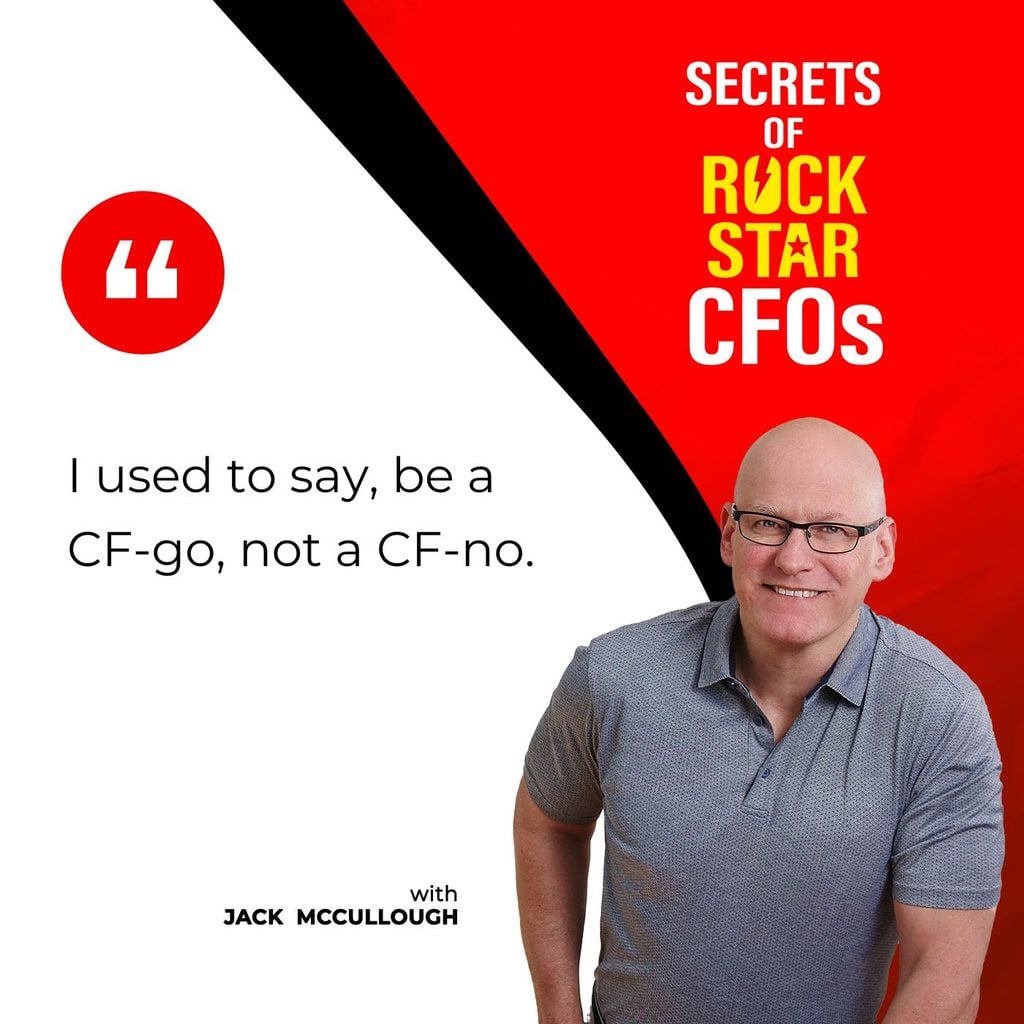
I used to say, be a CF-go, not a CF-no.
I love it.
Wait, I never trademarked it. If you like it, you’re willing to use it.
I may use it.
You talk a lot about the AI native experiences for CFOs and help me understand. It sounds compelling to me, enough that I’m asking about it, but what does that look like in the real world?
It’s what I said earlier, and I think it’s going to continue to evolve into where it goes with time. Basically, every experience that we are building has intelligence embedded into it. Whereas you, as a customer, should always have the right to decide how much you want to lean in and be in the loop or let go of the steering wheel and let Bill drive. Giving you examples is onboarding. If you’re just starting out, we are going to ask if you want to give me access to your Gmail or this or that, or certain files. We are going to onboard the vendors automatically.
You do not have to go sit there and do it. The bank information, whenever available. We have an ecosystem, we have a network, we know a lot about the customers. We also know a lot about the people who are taking money from our customers. How do we bring it together to leverage that data and build it into not only onboarding simplification, but if you have to make a payment, are you with your cash flow that we can see basically, is it better to use payment option one or two or three? Are you optimizing for time or convenience or cost? We can actually feed you the right answer that fits your context at the moment. It’s doing a lot of the number crunching and data work for you so that you can just say yes or no to the decision.
That makes sense. I do not want to say there’s a debate, but maybe there’s a tension because most companies are using AI in at least some capacity at this point. Maybe your friendly neighborhood grocery store still doesn’t need it or something like that. Most of the companies that people like you and I are going to interact with are using AI. Boards are saying they’re supportive of it, but yet they’re saying they’re not yet seeing the benefit. Obviously, long-term, the benefits are going to be tremendous, but they’re not showing up in the short and medium term. I’m wondering, do you have any theories on why this might be, or when it’s going to sort of be uniformly positive? The train’s left the station. It’s not coming back.
I just think that we went there very quickly. We expected the world of it, and it’s going to change the world. It probably will, but there are timeframes and horizons to it. The way I think about it is, as I said earlier, putting the upfront controls on how you measure the cost of it. What is the hypothesis of realizing the benefits? As not the creators of LLMs, but having the ability to use LLMs and pay for it, what I’m very thoughtful about is being able to measure which teams are using how much, and how do I control that with the output. It’s really like putting an ROI framework.
Just like you have resource allocation of humans, there is resource allocation of AI capacity that we’re looking at from an outcome perspective. This also goes to, what do we use AI for? What do we use traditional automation and ML for? Everybody’s so overexcited about AI that they’re forgetting that in some cases AI will be worse off in terms of giving you the answer because it’ll think about a new answer every time, and finance doesn’t always work. You have very clear rules and patterns that you need to detect and repeat over and over again. That’s how I think about it and what to use it for. It will give returns over time.
One thing that I have noticed is that there are a lot of companies that are right-sizing their resources before the full potential of AI is demonstrated within the company. That puts a little bit more of a push on the adoption of AI tools in the most effective way. It’s hard to give people the tools and just say, “Now work yourself out of a job.” You understand what the size needs to be and then give people the tools and they will figure out how to do the job of one and a half people or two people. Some are thinking around that space as well. This will settle, hopefully, in the next 12 to 14 months, where we start to figure out what the real economics are you’re starting to see at the end of it.
I like the specificity, 12 to 14 months. This is July 2026. I’m going to come back in September of 2027.
I would love to. Things are happening way faster than we ever envisioned. The amount of clarity, I mean, this is all software. The amount of clarity I have in terms of seeing every person’s usage and cost associated with AI is unbelievable. I can control it and redistribute it. It’s a different type of cost.
The pace of change, ever over nothing, but I have a friend. He’s one of the leading thinkers on this, and he’s written a book, but it’s pointless for him to write a book because by the time he goes through the process of editing and everything else, 30 percent of it’s wrong. He just gave up on it.
We are all thinking through the things that we see and trying to derive an outcome and what next year looks like. As you said, we are all going to be wrong in some ways.
Indeed. I want to change the subject a little bit. I like to get CFOs. I like to ask them what their favorite KPIs are in the business, both for their own measurement and how they report success to other people who do not have your financial background. For you, it might be an interesting question, Rohini, because you have that old-school background, chartered accountant, and yet you spent most of your career in FP&A, particularly with some evolving, cutting-edge customers. I’d love to get your take. What are your favorite or most useful KPIs?
I get that question a lot. It’s interesting because KPIs are so in context. What is the company trying to do? Where is it in its life? How can we measure? Irrespective of a specific metric or so, what I always like to say is that it can never be a metric without a control metric. Every time you think that this is the right thing that you need to push the company to, you have to very quickly think what else will go wrong when the whole organization is trying to move the needle on one thing? What would be an effective control metric to make that balance? That’s really important to think about the KPIs.
One of the things that I would say are two metrics that are a little bit non-traditional that I’m starting to think a lot about is decision velocity. How fast are you making decisions? I’m in an industry, I’m in an environment that is very rapidly evolving, and there’s no perfect answer immediately. How quickly we make decisions and how we iterate on that is really important. The second one is always keeping an eye on the value driven for the customer. How do we think about that and change the context from just inward-looking to a little bit outward looking of what value are you giving to the customer? Hence, you can think about your growth, your pricing. What is the company value share that will come out of that, but not to lose sight of that.
That’s great. I’m glad you didn’t say something really boring like inventory turnover.
Way back in my past.
I want to get into the role of the CFO, and you’ve had a great run as CFO for a highly prominent company, but you’ve also seen a lot of things. How do you think that the CFO role has evolved over the last few years? As an aside to that, is there something about the CFO role that will almost certainly never change?
Let me start with what never changes, right? We always will wear the hat of maximizing shareholder value. That’s never going to change. The governance aspect of the job will never change. Independence will never change. Some of those things are just fundamental. What is changing is I feel like the box in which the CFO plays keeps getting bigger. To the extent that there is probably not even a box around it anymore. It really depends on who the CEO you’re supporting is, what the company is, and how big a role you can play in not only thinking or helping the CEO define the strategy, but also how the long-term outlook of the company pans out.
It’s all about driving results, and whatever it takes to drive those results, you should be ready to play that role as a CFO. By the way, I do not think that’s a big change. It’s always been in some way or form like that. There have been CFOs way back when who always played that role. Now I just think that the percentage of those is increasing, and the people who are just doing the accounting and keeping the books and reporting on the numbers, that percentage continues to shrink.
That makes a lot of sense. I want to change a little bit again, because I know you’re very passionate about some philanthropic work that you do in India. I’d like to share a little about what are the things that you support in that capacity.
It just happened. I just started working back in India. There was one of the guys who used to help us do the laundry and do the clothes and stuff like that. He was talking to me, and we grew up together. He said, “I have a son and a daughter. Obviously it’s really important for my son to go to school, and I can only afford to send one kid to school. I’m thinking of pulling out my daughter,” and it just broke my heart. You could not take your daughter out of school. I started paying for her education. After a few years, I saw her graduating from high school.
By that time, I was getting more established in my career. I tasked my mother to go find in India a bunch of girls whose education I would fund. That has just become bigger. The cycle has continued, where I now just fund. I feel very passionately about women’s education, especially in India, and them finding financial independence and seeing it play through. Going back to India, I met some of these girls, and it’s so exciting. Somebody’s working in a bank, somebody’s studying to be a doctor, and things like that. It’s amazing.
It’s interesting because I tend to think of India as being a pretty forward-thinking country when it comes to that thing, just because I’ve known so many women of Indian heritage who are CEOs, entrepreneurs, engineers, and attorneys. It sounds like it’s not quite like as an American, we perceive it.
It’s not that there are just layers of India and layers of where you see that there is a stratification, so to say, and it’s still in the smaller towns and villages and stuff, at least when I was growing up, very different for girls.
I’m sure. There’s anything. Kudos to you for just turning a casual conversation into something that is literally changing the lives of people.
I want to do so much more, and I just feel like it’s not enough. Soon I will have time to invest more. You’re in your first year of a new, highly visible role. You can give yourself a little grace for a little longer.
Cool. I am curious. One of the other things is, do you have any advice for people who want to have an impactful career? I cannot imagine that being the CFO of Bill is a 40-hour-a-week job that’s pretty easy, but you’ve got to do other things besides work too. What are some tricks that people should be thinking about?
You have to find what excites you and what you absolutely love. For me, I love food, I love cooking, I love to feed my kids, my family, my friends. Every time I’m stressed, my bread becomes more complex because then I need more and take out my frustration and anxiety on the bread dough. Overall, I think it gives me so much joy to cook and experiment and do things like that. Secondly, when things are really stressful, I am a big reader. I read a lot of fiction. Just like nonstop almost every night. I have to disconnect with that. As again, the stress of the day or the week gets too much, the thrillers become more intense because it needs intensity to pull me out of the day-to-day things. You’ve got to find what excites you. Those are the two things I love to read, and I love to cook.
Those are two great things. Are you reading anything right now?
I am. I’m in this phase of reading. Mark Cuban, I think, is the author. He has a lot of different books, thrillers, and it’s very exciting. Netflix is making a bunch of series based on his books as well, which my daughter is watching. We exchange notes on what’s different, book versus TV.
It’s great that you can keep in touch with your daughters through that. This has been a lot of fun and some great insights, Rohini. I know you’ve got a lot going on, so I do want to thank you for your time. I’d like to ask, before we go. Do you have any advice beyond what we’ve already discussed for the next generation of CFOs? Maybe people who are just on the cusp of getting that first CFO position.
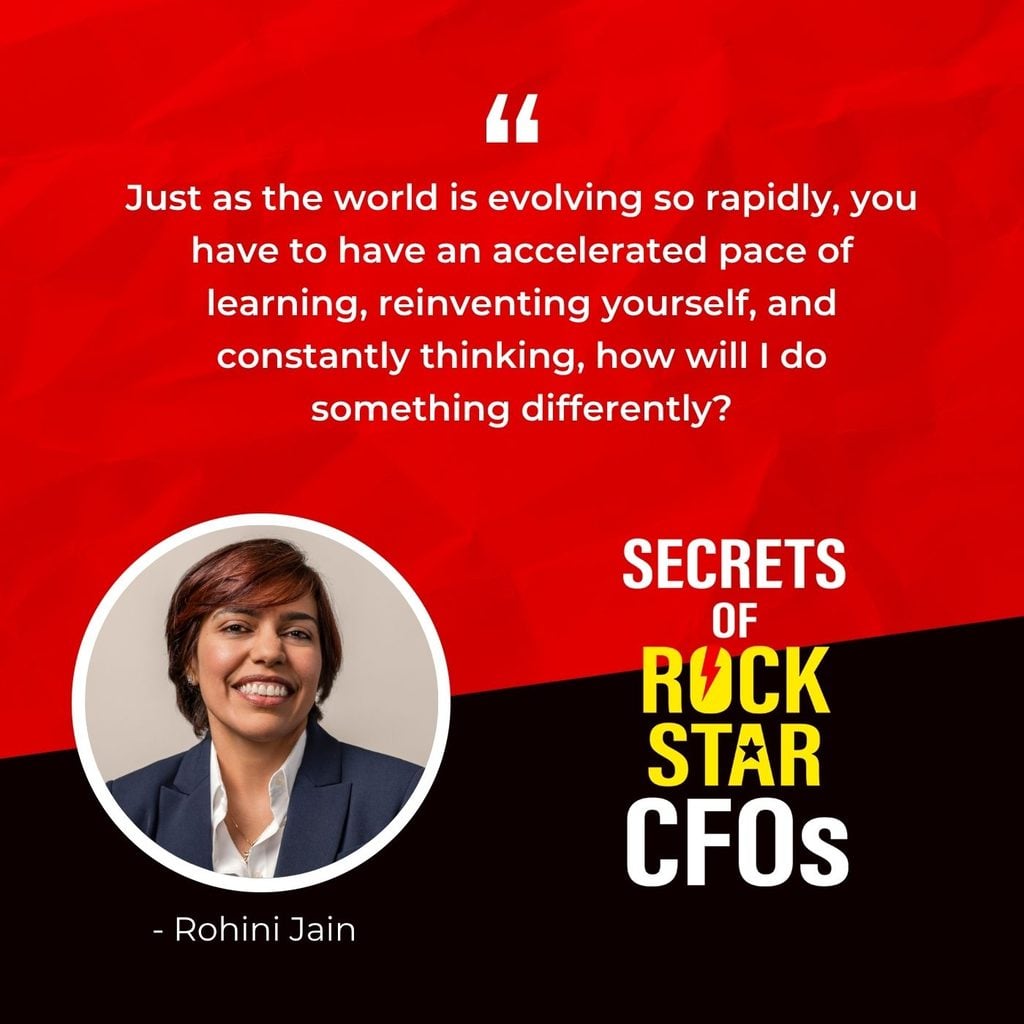
Just as the world is evolving so rapidly, we cannot be for one moment thinking that we know what we need to know to do the job. You have to have this absolutely accelerated pace of learning, reinventing yourself and constantly thinking, how will I do something differently? Just having done something for 20 years, 25 years, and having the comfort in that is not good enough anymore. The reason to keep learning is more relevant than any other time before.
That’s great advice. I’ve known very few CFOs who are not intellectually curious by nature. With that, thank you again. I’d just love to give you the final word.
It’s probably not a word, but it’s a thought. When I was growing up in my career, I always wanted to look around and see some women leaders who were at these top positions, but had it all. They were homemakers. They had children, and they spent time with the family and had a fulfilling career, and they were really hard to find. It was not easy for me to then say, “Here’s where I want to go and this is how.” I wanted to tell all the women out there who aspire to be women leaders, you can have it all. That’s all I want to leave.