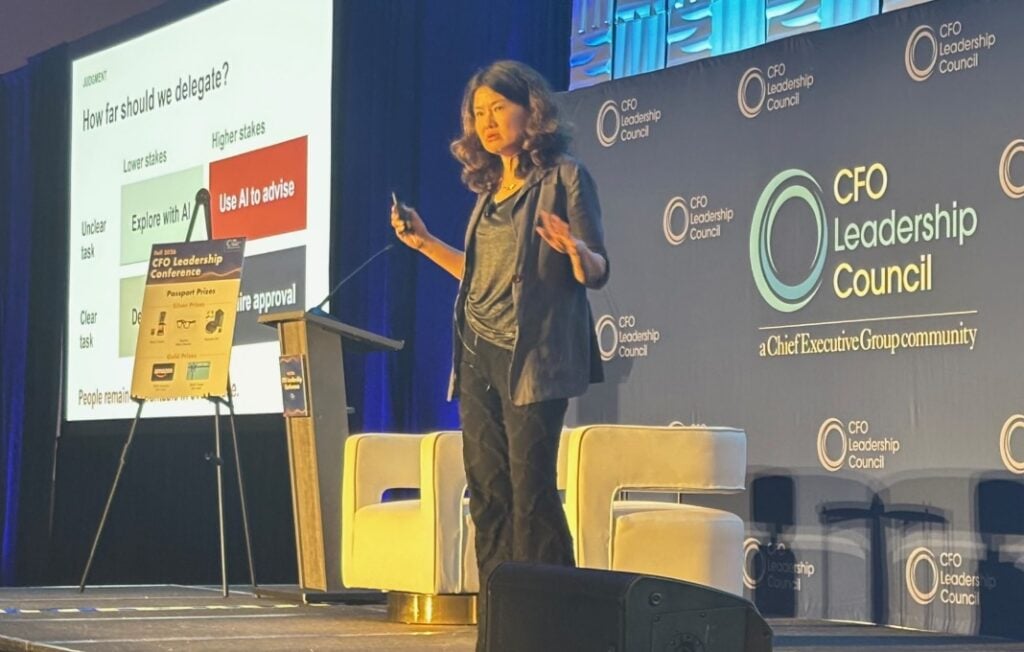
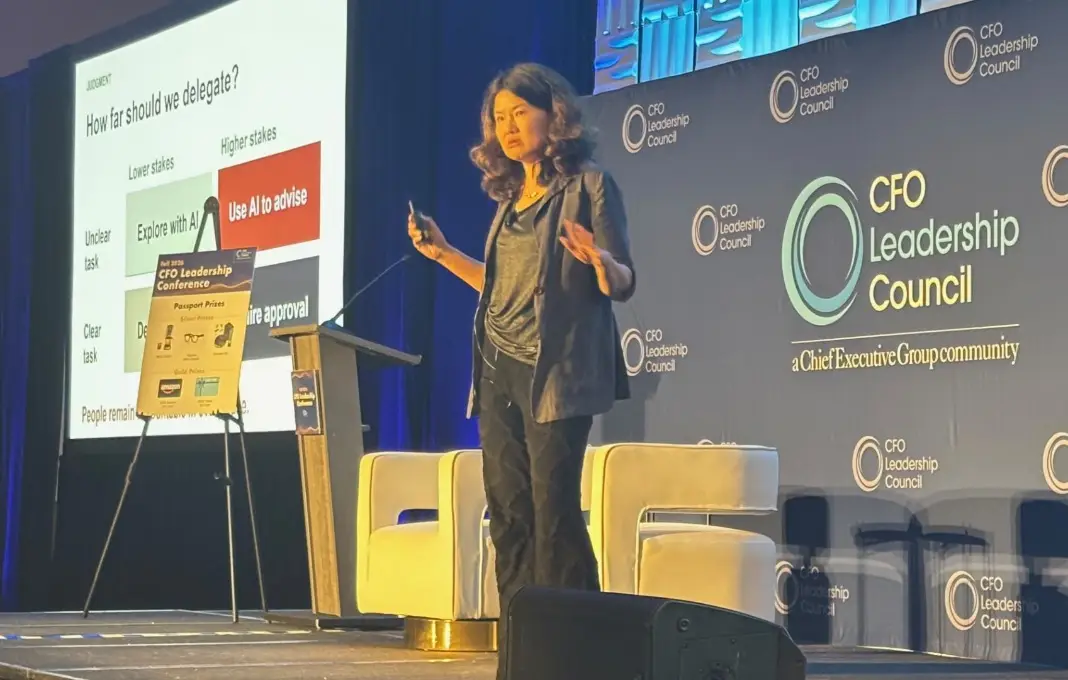
Valen Tong, CFO and general manager of MasterClass, the online learning platform, isn’t technical. She’d never read a line of code. A couple of months ago she gave an AI agent instructions to build her a voice-driven work app, left it running overnight and woke up to a $700 bill. The agent she’d launched had sent out more than 100 other agents to work on the job.
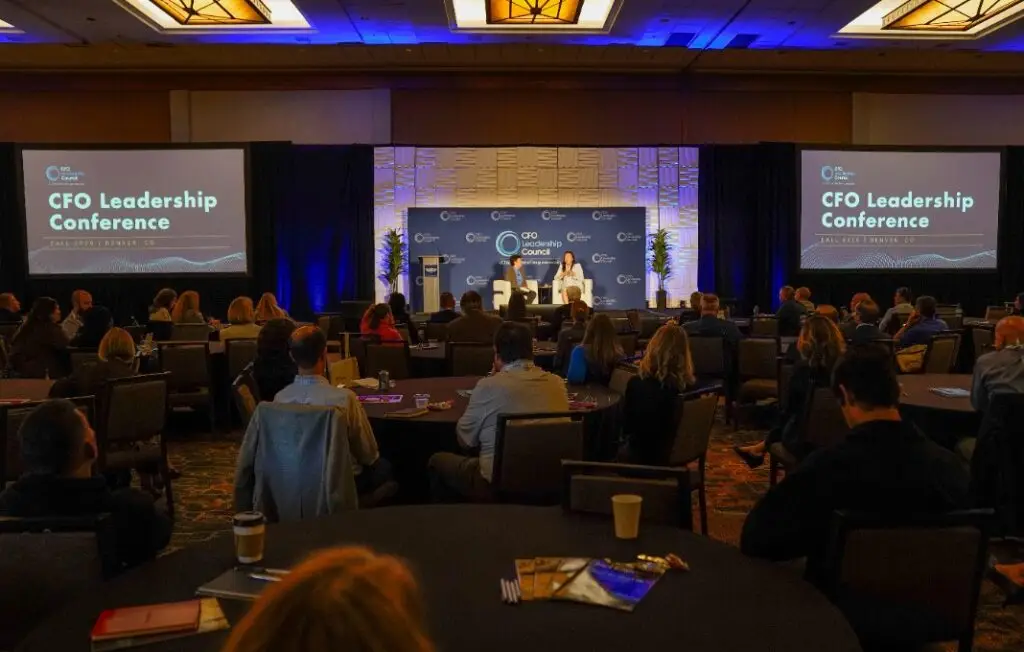
“Me—as the CFO of the company—is doing this. Imagine what the rest of the team is doing,” Tong told the CFO Leadership Conference in Denver.
She has since put guardrails in place. Her finance team has also come a long way since 2023, when its first AI exercise was getting ChatGPT to draw portraits of team members. Everyone on the team now builds their own AI workflows, and the time spent on close and forecasting is down significantly.
Over four years, the business went from one product line to four without adding anyone to the team. Getting there took plenty of mistakes, and they’re what prompted her to write Finance Rewired: A Field Guide for Finance Leaders in the Age of AI. She shared some of what she’s learned along the way:
Treat AI like a hire, not a system. Tong’s first mistake was running adoption like an ERP project: map the workflows, go live, move on. “But when you think about AI, AI is not a new system. It’s almost like a new person you just hired into the team.” For a new hire, the first day on the job is when training begins and go-live is the same for AI.
Be open about what you’re doing with AI—and how you’re failing. Tong’s AI-project kickoff presentation to her team got polite nods and then nothing. So she started writing a monthly letter to the finance function about the tools she was trying and the mistakes she was making. She also launched optional “build sessions” with no agenda. “The first meeting was very awkward, I have to say, because I was the only one talking and I did a demo myself. But the second meeting is different. The third meeting, everyone else was talking. I stopped talking.”
Treat resistance as fear. Her team worried about three things: that handing their work to AI would make them easier to fire, that they’d look incompetent learning it in front of colleagues, and that they’d mishandle company data. “The more time I spend with my team, the more I realize that what we are trying to solve is not the technology, it’s actually more about human emotion. It’s actually fear.”
To build acceptance, focus on what wastes people’s time. Tong had each team member name one to three tasks that waste their days. Her payroll manager was initially resistant to using AI. But he spent a full day each week moving data between systems, so he built his own agent to do it. “We don’t ask the question, ‘What do we want to automate?’ We ask the question, ‘What takes most of your time?’ There’s some subtle difference there.”
Make people speak, not write. With adoption success, polished, AI-written memos started showing up that fell apart under questioning. So she stopped accepting long AI-drafted memos. Now the person who owns a decision has to present it in the meeting. “Because in order to speak about something, you have to understand it first.”
Try the standard models before buying tools. Before bringing in a new AI vendor, Tong tests the problem on one of the big general-purpose models. If that gets her 95 percent of the way there, she skips the purchase, because every new tool has to be managed, and bringing a new tool into the company “doesn’t necessarily help you to get better at using AI.”
Give every workflow a human owner. Finance used to audit which people had access to which systems. Tong’s team now also logs every connection AI tools make to company systems. Every automated workflow has a named person who can shut down its agent if something goes wrong. “Because you cannot anticipate what AI is actually capable of doing in the future.”
Finally, never forget that you—not your AI—is going to be held accountable. Tong’s AI chief of staff, which she calls Pepper, reads her inbox, calendar and Slack and prepares a brief for her every morning. Pepper will keep getting smarter, she said, but the board won’t be calling it if there’s a problem. “I cannot say Pepper made this mistake. I still have to be the one who owns the mistake.”