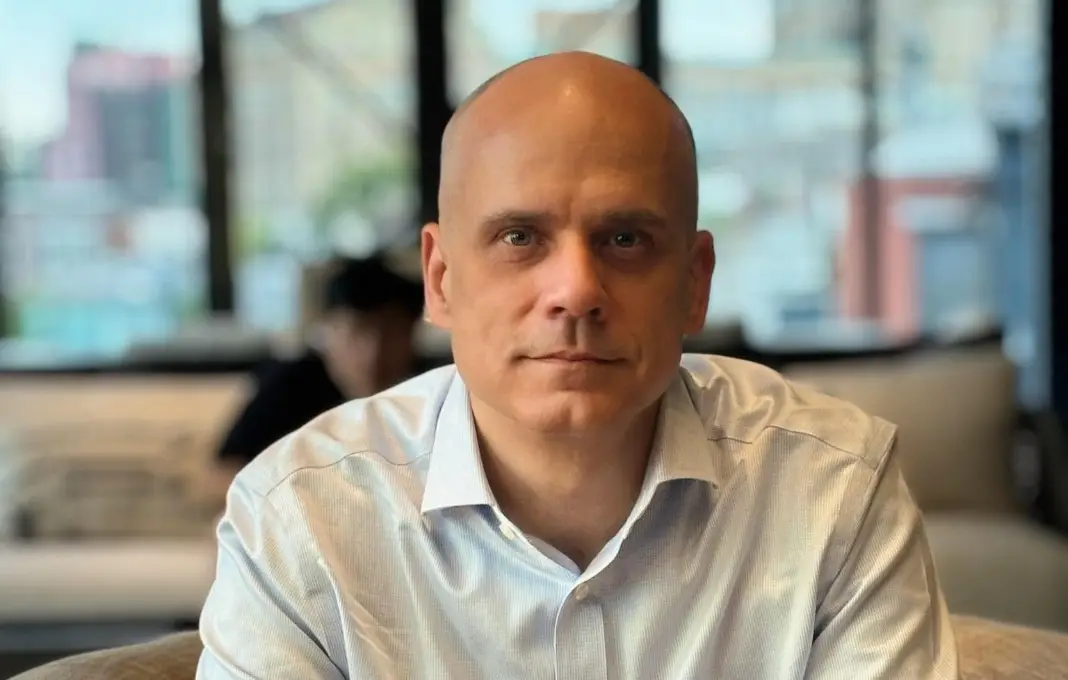
For CFO Christopher Smith, the role goes beyond financial acumen. “As a CFO, I firmly believe that the most important priority is to live your values and have integrity,” he says. “There’s a reason for that: Trust is the currency of investment.”
Smith is the CFO of CleanChoice Energy, a renewable energy company based in Washington, DC. In conversation with CFO Leadership, he discusses defining success beyond the balance sheet and developing the next generation of leaders.
How has your past experience shaped how you approach your role as CFO?
Over the past 25 years I’ve served in senior roles at top-tier public and private organizations where I focused on helping companies grow in smart, sustainable ways. Along the way, I’ve had the opportunity to develop some personal best practices that guide the organization and my team members to achieve success.
As a CFO, I firmly believe that the most important priority is to live your values and have integrity. There’s a reason for that: Trust is the currency of investment.
Teams look to CFOs as a source of strategic wisdom because their role is to link the company’s decisions with value for shareholders. But, as a leader, it’s essential to remember that you are part of a team. Your effectiveness is measured by how well the team is engaged, committed and trust each other.
It’s been exciting to step into my role as CFO at CleanChoice Energy. I am committed to providing the resources to help this company grow responsibly and find the right investment capital that’s stable and conservative so that investors and our customers remain confident in the future direction of the business and come along for the ride.
How do you define success as a CFO beyond the balance sheet?
Leadership is defined by the positive impact one has on people when one is no longer in the room. I try to focus on conducting myself every day, and through every interaction, to develop my team and nurture trust across the organization in such a way that in 10 years if someone called a team member of mine out of the blue and asked them if they would work with me again, they’d say yes.
But that doesn’t necessarily mean giving people what they want, it means helping people discern what they need. That contradiction is what makes the job so difficult and yet so rewarding for me, personally. I love seeing folks thrive. In the final analysis, the impact on the lives of the people around us is what really matters.
How do you develop the next generation of CFO/leadership within an organization?
My philosophy is that while not everyone can be a CFO, a CFO can come from anywhere. Nurturing talent across all levels of the organization is important, not just to the organization but to the individual’s growth, and a committed, motivated team starts with feeling supported from leadership.
I have a saying, which is that I don’t try to teach people how to lead. I try to help them believe that they can be leaders. I start with a development plan for everyone on my team that looks at an open exploration of where they want to go and what they aspire to achieve. From there, I help them build a program to get there and then I try to get out of their way.
What are some of the particular challenges or opportunities that CFOs in renewable energy are facing right now?
There are several challenges facing renewable energy right now, from tariffs to changing policies and tax credits. But, clean energy—given its low cost and broad availability—will be the long-term winner.
Capitalism has a way of bringing forward the best technology. Right now we critically need more energy, and clean energy is key to making that happen.
Regardless of policies, this year we will still deploy a significant amount of clean energy and this will be true for years to come. It’s faster to build solar projects than building gas, nuclear or coal plants that can take years to get permitting, built and up and running, along with the added benefit of being better for the environment.
But, while building traditional energy facilities is moving slow, electrification is moving faster. Batteries, in particular, are a massive accelerant. Costs are dropping and usefulness is increasing.
Here’s some evidence of that: Recently, I arrived to the office early and was chatting with the overnight guard. We were both admiring a delivery e-bike parked outside, sporting a sleek but supersized battery. The guard knew how many watt-hours the battery held and knew how long the bike could go before needing a recharge. He figured about three weeks!
While there has been a recent wave of solar bankruptcies, it highlights the importance of cash flow, balance sheet strength and scale. It does not highlight problems with the tech. This creates an opportunity for a company like CleanChoice Energy.
Consumers still want clean energy and so do investors, but they want industrial strength. Because we own the generation assets and also have a direct customer relationship, we offer reliability and transparency at a time when trust is critically important.
Our path forward is to maintain flexibility—ensuring our pipeline can adapt to evolving markets—while pursuing disciplined capital allocation. We have the dual advantage of owning infrastructure, combined with the agility of being a consumer-facing brand.
We’ve navigated cycles before, and we will remain resilient in supporting clean energy projects that generate competitive return. That mindset keeps us a step ahead, even in a shifting regulatory landscape.