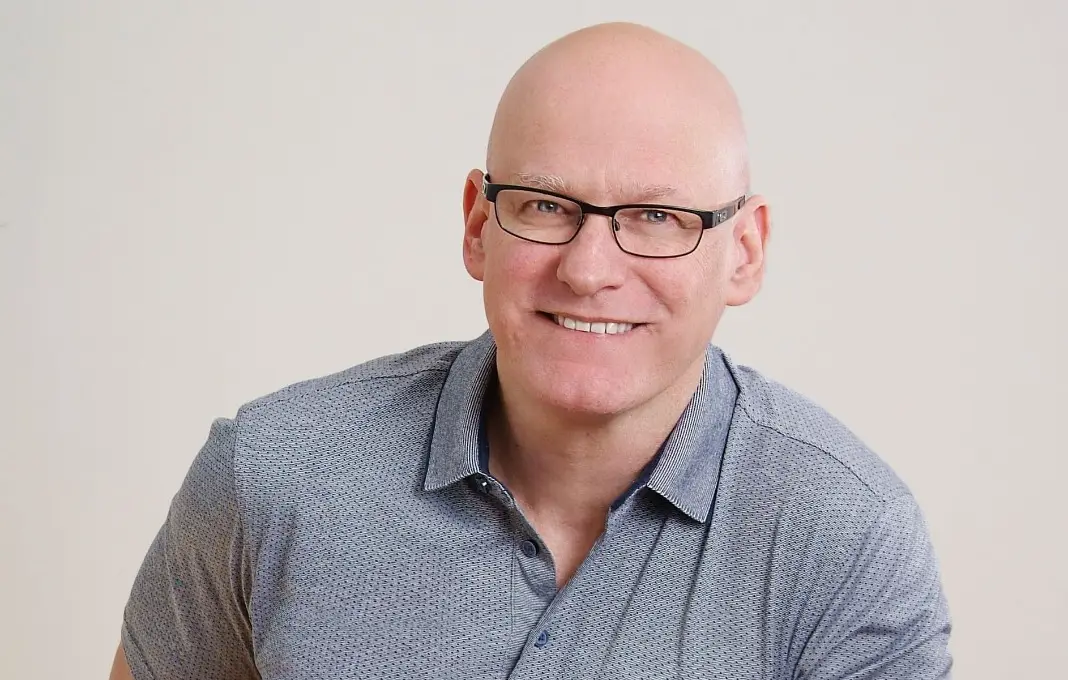
Twenty years ago this August, Jack McCullough was looking for community. Then CFO of a tech startup in Boston, McCullough wanted a place where he could bounce ideas off other finance chiefs, find solutions to problems, get inspired.
Fast forward to today and he—and the entire team behind CFO Leadership Council—is about to celebrate two decades of creating just that kind of organization. Started as an almost impromptu get together of a handful of CFOs on the MIT campus, CFOLC now has 3,000-plus members across 35 chapters, hosts close to 400 events a year, has a robust email community dubbed the Brain Trust by members and much more. (Chief Executive Group acquired CFOLC in 2021.)
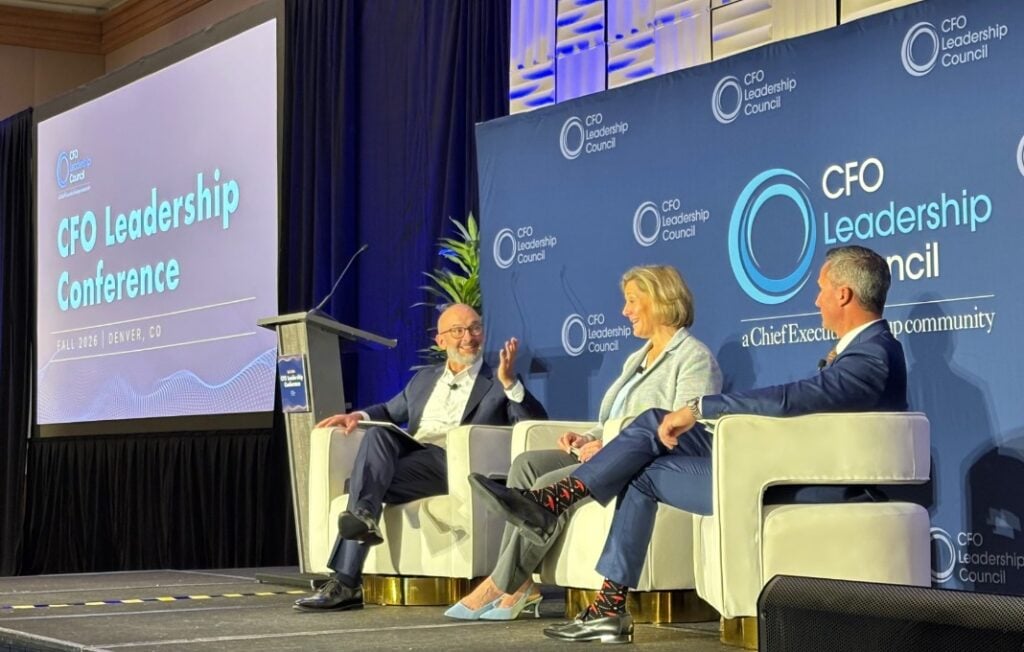
We spoke with McCullough, founder and president, as CFOLC prepares for its Spring conference in Boston June 3-5 (join us!) to talk about how the organization’s growth reflects the growth of the role of finance chiefs generally, what’s changed in 20 years—and what to expect going forward.
Take me back to August 2006. How did the idea of CFOLC emerge?
I was a CFO. And there were organizations for CFOs, but I felt like they didn’t really serve the needs of CFOs. They were very sponsor-centric. Without naming an organization, one of the programs they offered was, How to Select an Auditor—and the speakers were auditors. It just felt like a thinly disguised sales pitch.
I was working for venture-backed startups, and there wasn’t a group at the time for CFOs of that background. So I really only wanted this to be a Boston group with maybe 20 to 25 members who worked for VC-backed startups. We weren’t going to be exclusionary. But I wanted to build a network. I wanted to learn from people who had done some things, and I wanted people with similar backgrounds.
So you were looking for community, peers who you could bounce things off of.
We thought it’d be fairly easy to get people to come and speak if we wanted to. We had 25 CFOs who were relatively early in their CFO journey, from well-funded, early-stage startups. And this was shortly after the dot-com era. It was an exciting time to be in that space. We kind of said, we can get anyone we want to come and talk to us. And well, that wasn’t literally true, but it was largely true.
The first event was in August 2006 at MIT Sloan. It was the summer, so they gave me a space for free. I was a fairly active alum at that point. I expected we’d get about 15 people—and we got about 50.
And fairly easily, right?
There was no promotion. I just sent an email to several CFOs I knew and said, this is what I’m trying to do. If you want to come, I’d love to have you and if you think it’s a really good idea and you know somebody who might benefit from it, send them. I sort of touched a nerve. It turned out CFOs, like all C-Suite members, did want a community where they could talk to each other, no sales pitches, no outside judgment. I’ve always felt I can say anything in front of a CFO.
Meaning?
They’re really good at keeping secrets. I could say, “My boss is a moron,” and it’s not going to get back to my boss. We actually did have a conversation on which of us had the worst boss once. If there were a bunch of random people in the room, I wouldn’t feel quite as safe about that. The conversations would have been much less candid.
So how did the organization evolve?
It was kind of like the joke about the Procrastinators Club—they meet when they get around to it. We didn’t have a set schedule or anything like that. We probably had four or five meetings the first year. I had a full-time CFO job. Running the group was a great opportunity, but it did take up my time. Eventually we decided to get a little bit more formal about it, and we found a law firm in Boston that made their space available to us for free.
I actually quit at the end of the second year. At that point, we were meeting six times a year. So at the April meeting, I said, “You know, this is what we’re doing in June. By the way, that’s going to be the last meeting I’m going to run. If anyone wants to take it on, I am happy to do a good transition, but it’s taking up too much of my time.”
Joyce Bell, who was the first member and we’re friends to this day, came up to me and said, “We’ve got to find a way to keep it going.” So that was the point where we decided to start charging dues, and we brought in a sponsor. It was a little company called NetSuite. They remain our biggest sponsor 20 years later. And then we brought in another one, Robert Half, who is also a sponsor all these years later.
And you made your first hire, right?
Yes. I hired a woman named Becky Blackler, who eventually became president. I still had a full-time job, so it was still kind of a hobby for me. I was working at KPMG, so I couldn’t take any money.
It sounds like a labor of love. When did you evolve beyond Boston?
The husband of a member from Boston was an investment banker, so they moved to New York. She called me a few months later and asked if I’d launch a chapter there.
I was just a little bit too busy to do it, so I politely declined. And then after a few months she asked again. She was in a CFO group and said, “They’re not doing it like you were. Can I launch this for you under your brand?”
Chapter two.
Yeah. We had no vision of going to New York whatsoever. But she did. And then that scenario repeated in Philadelphia, and then Becky and I decided to make a go of it [as a national organization].
Boston, New York, Philly, and then it just grew from there?
Yeah. In the last 12 years we’ve gone from two chapters to 35. They come in batches. We did LA-Orange County and San Diego together, Portland and Seattle together. Other than during Covid, we’ve launched two to three per year.
How many members overall?
About 3,000, from all kinds of companies. The only CFO I ever said no to was the CFO of his fraternity. I’m like, “Reach out in 10 years because I want to have you in this community, but just not today.” I should look him up. I bet he is a CFO somewhere.
And from a range of company sizes?
Absolutely. The billion-plus company CFOs haven’t joined us in large numbers. There are a few reasons. They network a little bit differently than CFOs from smaller companies. Also—they’re just so busy.
We’ve had some public company CFOs of that size. There was one out of Massachusetts. He was a member for three years—and I never met the guy. He was just too busy to ever make it to a meeting. I sent him an email and said, “Look, don’t renew. I’ll keep you on the mailing list. If you want to come to one of the meetings as my guest just, just let me know.”
Then you sold the organization to Chief Executive Group in August 2021.
Yes. We had started a national conference and a webinar series, and I’d get occasional inquiries to sell but I wasn’t particularly interested in doing that. I liked what I was doing, and it worked. But coming out of Covid, [CEG chairman] Wayne [Cooper] reached out to me. Eventually we had a great conversation, and my thinking began to shift.
Today you have two major conferences a year—Spring and Fall—many webinars and more, and then there are these unique moments, when the community feel of this really comes together. Talk about what happened when Silicon Valley Bank collapsed in 2023.
We’re just blessed that the members are as generous as they are—in every sense. During Covid, I had members offer to double their membership fees to help us through.
It speaks to how much they value the community.
Yes. The Silicon Valley thing, when I look back on it, may be my proudest moment with the CFOLC. The bank collapsed. And because we have a lot of small companies that are in the innovation sector, even though Silicon Valley wasn’t the biggest bank in the world, it might have been the biggest bank within our community. And then First Republic Bank’s crisis happened a few days later.
There was a lot of fear about what’s next.
It’s interesting, it wasn’t the young CFOs calling me in a panic saying, “What am I going to do?” It was the opposite. It was the veterans calling. They were like, “We have a lot of first-time CFOs in our community. There’s a bunch of us who were CFOs in 1988 during the banking crisis. Why don’t we hop on Zoom and share what we’ve learned? Let’s do it this afternoon.”
And you pulled it together.
I had to upgrade my Zoom license because so many people wanted to jump on—it ended up being hundreds. And then we had another meeting days later because things were changing so fast and we met daily for a bit, as long as people wanted to. In some ways it’s been easy to be a CFO the last 20 years because the economy’s been so good. It turned out many members didn’t know best practices, like not to have all of their money at one bank. Suddenly, they were worried about how to meet payroll—since all of their cash was at SVB.
It’s such a metaphor for what the organization is and the way it’s about people coming together, answering these very specific questions and just being useful. Talk about the “Brain Trust,” CFO Connect. It’s a private email group, right?
Yes, a place for people to ask other members anything they might want. Responses are pretty immediate. The Brain Trust is global. We have members on every continent that has CFOs.
So you have a great vantage point for understanding this community. Any bold predictions for the future?
Here’s one: CFO will soon be a majority-female profession.
Interesting. What’s your thinking?
A number of reasons. One, there are simply more women entering the profession today. Among CFO Leadership Council members, women now make up the majority of professionals in pre-CFO roles, and there are a lot more women succeeding in the profession at very high levels than ever before. At one point, the top person at all of the big four accounting firms was a woman. They didn’t collude or try to make some great social statement. They were just brilliant leaders who happened to be women.
The other thing is the nature of the way the world is changing and, at the risk of painting with a broad brush, the qualities of great CFOs today are different than 20 years ago.
How so?
The technical skills needed to be a CFO are still important, but people are looking for more than that. Modern CFOs are expected to be empathetic leaders, great communicators and have a collaborative work style. These are areas that women excel in. CFOs are also expected to be resilient problem solvers. And, let’s face it, American women, if you’ll forgive the phrase, are really good at getting shit done.
What are some of the other changes from 20 years ago that you see today? You talked about Silicon Valley, that there were all sorts of members who had no experience with their bank failing. What else?
When I got my CFO role, I was a controller and promoted into the role. That was the most common path to follow. Most CFOs at the time were CPAs.
It was a very good job. But it was backward-looking. It was recording history, it was compliance, expense management, taxes, things like that. In fact, with the podcast I host [Secrets of Rockstar CFOs] my tagline is, “CFOs no longer record history. They make history.”
In what sense?
It’s become a very strategic, forward-looking, planning, analytical role. Other than the president, you are arguably the second most valuable person in your company because you understand both strategy and finance. And not many people are experts in both of those areas.
How has the CFO-CEO relationship evolved?
For years, CFOs have been saying their most important professional relationship was with the CEO. You know, all fine and good. But I never sensed until the last few years that that sentiment was reciprocated. It’s no knock on the CFOs. It just wasn’t. But now a lot of CEOs will call me and say, “I want a strategic partner” or “This guy’s retiring, and he’s the most important relationship I have in my life.” So finally, it’s actually being reciprocated in large numbers.
Other C-Suite relationships have shifted too, right? The CFO-CIO or CTO relationship, especially with the advent of AI, has become more and more important. Maybe also CFO-CHRO.
It’s probably true. It’s become a really very cross-functional position. You can’t just bring knowledge of accounting and finance. You need to understand marketing too, for example. With marketing now being so data-analytic centric, that’s strengthened the partnership between finance and marketing.
Undoubtedly you’ve heard the expression for marketing, “We know half of it works. We just don’t know which half.” If you really want to antagonize the CFO, that’s a great starting point. And with data analytics, it’s no longer true.
Is there anything that has surprised you in the last 20 years?
I bet people who aren’t in the community wouldn’t necessarily think of CFOs as empathetic. I know a lot of them, and can say with certainty that they really are. I see CFOs who are arguably competitors with each other, or their businesses are anyway, become friends and really help each other through things. I’m pretty sure that the CEOs of Coke and Pepsi have a very nice, cordial relationship and when they cross paths, it’s a lot of fun for both of them. But I don’t think they’re helping each other.
Their CFOs might be a little different. I constantly see how collaborative CFOs are, how empathetic and giving of their time they are. For example, if a member loses their job, others rally around them with advice, leads or strategic introductions. It doesn’t surprise me anymore, but it surprised me at first.
How does the newest generation of CFOs seem to you?
That’s another thing I’m surprised by—with the occasional 20-something member and large number of 30-something CFOs who join our community at that early career point, I’m surprised how well prepared they are for the work. They’re impressive.
Why do you think that is?
I don’t know. You read the press, you just hear negative stuff about Gen Z. I haven’t seen it. My only complaint is they’re a little too respectful and call me “Mr. McCullough.”
It makes you feel old! Let’s talk about something relatively new: FATE, the Finance & Accounting Technology Expo, which is just two years old and will have its third event in New York City on November 18-19 with close to 200 vendors and 2,000 attendees. Already, it’s the largest gathering of finance and accounting professionals in the country.
Like all of our ideas, it was member-driven. [CEG President] RD Whitney reached out to the Brain Trust and asked, what’s in your tech stack? I was thinking that there’d be 40 responses and there were hundreds. Wow. They were saying, “By the way, there’s too many good options out there. Is there a way you can set something up to help us buy?” So this is designed to help educate the buyers, give them a sense of what’s out there and how it might help.
What are you looking forward to most in the next 20 years?
I’m looking forward to the continued growth and the respect CFOs are receiving. They are getting opportunities unthinkable a generation ago. It used to be a bad thing when a CFO became the CEO of the company because it usually meant the company was in financial distress, and they wanted the best financial mind to guide it through. Often the endgame was to bankrupt it in a dignified manner. A wind-down.
More and more, you see a lot of CFOs becoming CEOs. Last year set the record, which broke the record from the year before, which broke the record from the year before. Modern CFOs just bring a lot of skills to the CEO role, and into board roles, that my generation of CFOs didn’t. I’m looking forward to breaking a few more records.